
Medical expert of the article
New publications
Preparations
Sialor spray: use for a runny nose
Last updated: 31.10.2025
All iLive content is medically reviewed or fact checked to ensure as much factual accuracy as possible.
We have strict sourcing guidelines and only link to reputable media sites, academic research institutions and, whenever possible, medically peer reviewed studies. Note that the numbers in parentheses ([1], [2], etc.) are clickable links to these studies.
If you feel that any of our content is inaccurate, out-of-date, or otherwise questionable, please select it and press Ctrl + Enter.
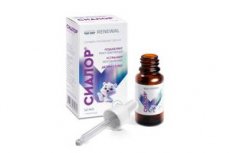
Various nasal products with different compositions and purposes are marketed under the brand name "Sialor." At least three variants are available: "Sialor Protargol" with silver proteinate, "Sialor Rhino" with oxymetazoline, and "Sialor Aqua" with isotonic or hypertonic seawater solution. The specific variant determines the indications, age restrictions, duration of use, and safety profile. [1]
The fundamental difference lies in the evidence base. Oxymetazoline is a well-studied topical vasoconstrictor for short-term relief of nasal congestion. Seawater is essentially a physiological saline solution used as an adjunct to moisturizing and rinsing. Silver proteinate is a topical antiseptic with a limited and inconsistent clinical evidence base and historical reports of the risks of silver accumulation. [2]
In modern otolaryngology guidelines, the primary treatment for acute rhinitis and rhinosinusitis is saline irrigation and, if necessary, a short course of vasoconstrictor sprays. Silver preparations are not included in standard international treatment algorithms for acute rhinitis and rhinosinusitis due to a lack of high-quality randomized trials and concerns about long-term safety. [3]
It's important for patients and parents to understand that Sialor is not a single drug, but a line of products. Below, we'll discuss the composition, indications, dosage regimens, evidence base, and risks for each option to ensure informed choice and safe use. [4]
Sialor variants: composition and purpose
Sialor Rhino contains oxymetazoline, an alpha-adrenergic agonist that quickly reduces nasal congestion and facilitates breathing. The effect occurs within minutes and lasts for 10-12 hours. This medication is intended for short-term use only, over several days, due to the risk of rhinitis medicamentosa if overused. [5]
Sialor Aqua is a sterile saline solution for rinsing and moisturizing. Saline irrigation improves mucociliary clearance, liquefies secretions, reduces symptoms, and reduces the need for other nasal medications in adults and children. The evidence base for saline irrigation is stable and is updated in studies on allergic rhinitis and rhinosinusitis. [6]
Sialor Protargol is a silver proteinate. Historically, it was used as a topical antiseptic. Current data are mixed: there are small studies on its effectiveness in acute rhinitis and nasopharyngitis, but their quality and reproducibility are limited. Furthermore, questions remain about the safety of long-term and repeated use of silver salts. International regulators and specialized organizations warn that colloidal silver is not recognized as safe and effective for treating medical conditions. [7]
Understanding the differences is critical: if the goal is to quickly relieve nasal congestion for 2-3 days due to a cold, oxymetazoline is usually the preferred option. If the goal is to moisturize and rinse the mucous membranes, saline solutions are more appropriate. Silver proteinate is not considered a first-line treatment for "antiseptic" purposes in current international recommendations. [8]
Table 1. The Sialor line: what's inside and what it's for
| Name | Active ingredient | The main goal | Key Notes |
|---|---|---|---|
| Sialor Rhino | Oxymetazoline | Quick relief from nasal congestion | Only briefly, a few days, risk of drug-induced rhinitis with abuse |
| Sialor Aqua | Saline solution | Rinsing and moisturizing | Suitable for regular supportive care |
| Sialor Protargol | Silver proteinate | Local antiseptic | Limited evidence base, safety concerns with long-term use |
How the different options work
Oxymetazoline activates alpha-adrenergic receptors in the mucous membrane, causing vasoconstriction and reducing swelling. This rapidly reduces airflow resistance and facilitates nasal breathing. The effect is pronounced but temporary, and with prolonged use, tolerance and reactive hyperemia develop, leading to drug-induced rhinitis. [9]
Saline solutions work differently: they mechanically wash out secretions and allergens, improve mucociliary clearance, and moisturize the epithelium. This isn't a "quick nasal clearing" solution, but a supportive hygiene procedure that reduces the severity of symptoms and the need for other nasal sprays. Hypertonic solutions have been shown in some studies to have an additional effect on congestion due to the osmotic gradient. [10]
Silver proteinate exhibits antimicrobial activity in vitro, but the translation of this activity to clinical outcomes in acute rhinitis is limited by the quality and number of studies. There are reports of no benefit from colloidal silver in chronic rhinosinusitis and equivalence based on the results of local studies with small sample sizes. This does not provide grounds for including silver preparations in international first-line treatment algorithms. [11]
The focus of modern treatment for the common cold is symptom relief and support for natural mucosal cleansing, not "sterilization" of the nasal cavity. Therefore, recommendations predominantly focus on saline irrigation, a short course of vasoconstrictors, and, if indicated, intranasal corticosteroids for allergic conditions. [12]
Table 2. Mechanisms and clinical expectations
| Means | The main mechanism | When to expect the effect | What is important to remember |
|---|---|---|---|
| Oxymetazoline | Narrowing of the mucous vessels | Minutes, up to 10-12 hours | No longer than 3-5 days in a row, risk of drug-induced rhinitis |
| Saline solutions | Rinsing and moisturizing | Gradually, with regular use | Safe as an adjunctive therapy, can be used long-term |
| Silver proteinate | Local antimicrobial activity | The data is heterogeneous | Limited evidence base, safety concerns |
Evidence base: what is known today
For oxymetazoline, evidence of efficacy and relative safety with short-term use is robust: it rapidly and significantly reduces congestion, as reflected in pharmacotherapeutic reviews and pediatric monographs. A key requirement is a strictly limited duration of use to avoid triggering rhinitis medicamentosa. [13]
Saline irrigations are considered a safe, simple, and useful adjuvant for acute and allergic rhinitis, as well as after nasal surgery and in chronic conditions. Systematic reviews show symptom reduction and a decreased need for other medications, although the optimal concentration and volume of solution are debated.[14]
The clinical picture regarding silver preparations is mixed. A few small studies report potential benefits in acute rhinitis, but large, high-quality randomized trials are lacking. Conversely, in chronic conditions, colloidal silver has shown no advantage over standard therapy. This explains why international guidelines do not recommend silver as a routine treatment for rhinitis. [15]
Regulatory agencies and national centers for complementary and integrative medicine warn of the lack of evidence for effectiveness and the risks of silver accumulation with the systematic use of colloidal forms. Consumers are advised to exercise caution and avoid long-term use without compelling reasons. [16]
Table 3. Strength of evidence for the components of the line
| Component | Summary assessment of evidence | Comment |
|---|---|---|
| Oxymetazoline | High for short term use | Rapid symptomatic effect, strict time limits |
| Saline solutions | Average, stable | Safe adjuvant, a discussion about concentrations and volumes |
| Silver proteinate | Low and uneven | No inclusion in international first-line algorithms |
Safety: What to look for
The main risk of oxymetazoline is medicamentous rhinitis when used for more than 3-5 days in a row. If overused, congestion returns "increased," creating a cycle of dependence. Treatment involves discontinuing the spray, sometimes a transitional course of intranasal corticosteroids, and maintenance irrigation. [17]
Oxymetazoline can cause systemic effects in case of overdose, especially in young children: tachycardia, increased blood pressure, and drowsiness. Therefore, it is important to adhere to age-appropriate dosages and not exceed the recommended dosing frequency. People with hypertension, cardiovascular, or endocrine diseases should use it with caution and consult a physician. [18]
Saline solutions are considered safe for long-term use at all ages when used correctly. Rare side effects include discomfort and a burning sensation, especially with hypertonic solutions. Selecting the right temperature, volume, and technique can help improve tolerance. [19]
Cases of localized and systemic argyria have been reported with silver proteinate after long-term use of silver-containing drops and sprays. Although rare, the risk of silver accumulation makes prolonged and repeated courses undesirable without compelling indications. International sources warn that colloidal silver products are not recognized as safe and effective for treating medical conditions. [20]
Table 4. Common risks and how to prevent them
| Option | The main risk | Prevention |
|---|---|---|
| Oxymetazoline | Medicinal rhinitis | No longer than 3-5 days in a row, the minimum effective frequency |
| Saline solutions | Irritation with hypertonic solutions | Warm solution, correct technique, selection of concentration |
| Silver proteinate | Silver accumulation, localized argyria | Avoid long-term use and frequent courses, evaluate alternatives |
How to use correctly: dosage and duration
Oxymetazoline is used briefly. For adults and children over school age, concentrations of approximately 0.05% are typically used, with one spray in each nostril up to twice daily, for no longer than 3-5 days in a row. For younger children, lower concentrations are used according to age-specific instructions. It is important not to exceed the recommended dosage frequency or combine multiple decongestants. [21]
Saline solutions are used regularly: 1 to 2 times a day for chronic conditions and more frequently during acute periods. The volume and concentration are adjusted individually. Irrigation is especially useful before applying other nasal medications, as it improves the medication's delivery to the mucosa. [22]
Silver proteinate, if prescribed by a physician, is used strictly as directed, and repeated or prolonged treatment regimens are avoided. When planning to repeat the course, it is advisable to re-evaluate the indications and discuss alternatives, as consistent benefits over standard therapy have not been demonstrated. [23]
General hygiene rules increase the effectiveness of any nasal therapy: gently blowing your nose before spraying, controlling air humidity, drinking enough fluids, and sleeping on an elevated pillow if congestion is severe. [24]
Table 5. Approximate modes of application
| Means | Frequency | Duration | Key caveat |
|---|---|---|---|
| Oxymetazoline | Up to 2 times a day | 3-5 days | Next comes the risk of drug-induced rhinitis. |
| Saline solutions | 1-2 times a day and more often during the acute period | If necessary, for a long time | Technique and volume are more important than "brand" |
| Silver proteinate | By individual appointment | Short course | Avoid long repetitions without good reason |
Special groups: children, pregnant women, patients with concomitant diseases
In children, topical vasoconstrictors should be used cautiously and for limited periods, strictly in age-appropriate concentrations. For colds and allergic rhinitis, saline irrigations are key, while for allergies, intranasal corticosteroids and antihistamines prescribed by a doctor are recommended. If signs of drug-induced rhinitis occur, discontinuation of the decongestant and a weaning plan are required. [25]
In pregnant women, non-drug measures and saline irrigation are preferred. If vasoconstrictors are unavoidable, short courses are possible with the approval of a physician and strict monitoring of duration. Any silver-containing medications are not considered standard care for pregnant and breastfeeding women. [26]
Vasoconstrictors should be used with caution in patients with hypertension, coronary heart disease, thyrotoxicosis, glaucoma, and those taking certain antidepressants. If congestion symptoms are frequent, it is advisable to investigate the underlying cause rather than prolonging courses of decongestants. [27]
For chronic rhinosinusitis, the strategy is different: the basis is regular irrigation, intranasal corticosteroids, sometimes high-volume steroid washes, and other methods as indicated. Silver is not included in the standard regimens. [28]
Table 6. What to choose based on the clinical situation
| Situation | First line | What to avoid |
|---|---|---|
| Acute cold with congestion | Saline irrigation, short course of oxymetazoline | Long-term use of a decongestant |
| Allergic rhinitis | Saline irrigations, intranasal corticosteroids, antihistamines as indicated | Self-medication with long courses of silver |
| Chronic rhinosinusitis | Regular irrigation, intranasal corticosteroids, postoperative protocols | Antiseptic monotherapies |
Frequently asked questions
Can Sialor Rhino be used for weeks if it helps?
No. The risk of medicamentous rhinitis increases after using it for more than 3-5 days in a row. If congestion persists, the underlying cause should be reassessed rather than continued treatment. [29]
Is silver in cold sprays beneficial?
There is no convincing evidence of superiority over standard supportive therapy, and concerns about long-term safety remain. Silver is not included in international first-line treatment guidelines. [30]
What should a child do for a runny nose?
Saline irrigation and a humidification regimen. Decongestants – only briefly, in age-appropriate concentrations. For allergies – follow a doctor's prescription. [31]
Is it possible to combine irrigation and decongestant?
Yes. First, irrigation, then, if necessary, decongestant injection, but not longer than 3-5 days. [32]
Table 7. Differential clues for "runny nose"
| Possible cause | Tips | What does the choice influence? |
|---|---|---|
| Acute viral infection | Fever, aches, acute onset | Short course of decongestant, irrigation |
| Allergic rhinitis | Sneezing, itching, seasonality or triggers | Intranasal corticosteroids, antihistamines |
| Medicinal rhinitis | Long-term use of a decongestant, no effect without it | Decongestant withdrawal, transitional support of INCS |
| Chronic rhinosinusitis | Duration more than 12 weeks, congestion, decreased sense of smell | Regular irrigation, INKS, referral to an ENT specialist |
Table 8. Brief reminder for safe use at home
| Step | What to do |
|---|---|
| 1 | Find out which Sialor you have: Rhino, Aqua, Protargol |
| 2 | Rinse your nose with saline solution before taking any medication. |
| 3 | If you need a quick effect, use oxymetazoline for no longer than 3-5 days. |
| 4 | Avoid long-term silver courses without compelling reasons. |
| 5 | If symptoms persist, consult a doctor and clarify the diagnosis. |
Conclusions
- Sialor is not a single product, but a line: oxymetazoline, saline solutions, and silver proteinate have different roles, effectiveness, and risks. 2) For acute rhinitis, saline irrigations and, if necessary, a very short course of oxymetazoline play a leading role. 3) Silver is not included in international first-line treatment guidelines and should not be used long-term due to the limited evidence base and risks of cumulative use. 4) Safety is determined by the correct choice of treatment and strict adherence to the dosage regimen. [33]