
Medical expert of the article

New publications
Inflammation of hemorrhoids: why it occurs, what it looks like, what are the dangers, and how to treat it
Last updated: 24.04.2026

All iLive content is medically reviewed or fact checked to ensure as much factual accuracy as possible.
We have strict sourcing guidelines and only link to reputable media sites, academic research institutions and, whenever possible, medically peer reviewed studies. Note that the numbers in parentheses ([1], [2], etc.) are clickable links to these studies.
If you feel that any of our content is inaccurate, out-of-date, or otherwise questionable, please select it and press Ctrl + Enter.
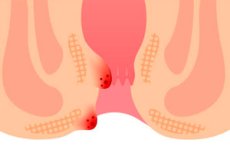
In everyday life, the term "inflammation of hemorrhoidal nodes" is widely used, but in clinical practice, it can cover a variety of conditions. More often, it refers not to a purulent infection, but to swelling, irritation, thrombosis of an external node, prolapse of an internal node, or strangulation of an internal node. This is an important distinction, as the treatment strategies for these conditions vary. [1]
The National Institute of Diabetes and Digestive and Kidney Diseases defines hemorrhoids as dilated and inflamed veins around the anus or lower rectum. But when a patient describes a "hemorrhoid as inflamed," they are usually describing a clinical exacerbation: the hemorrhoid has become larger, harder, more painful, and is interfering with sitting, walking, or bowel movements. [2]
The underlying mechanisms for such exacerbations are well known. Increased intra-abdominal pressure due to constipation, straining, passing hard stools, prolonged sitting on the toilet, pregnancy, or physical exertion intensifies venous congestion in the hemorrhoidal plexus. This leads to swelling, tissue distension, irritation of the mucous membrane or skin, and sometimes thrombosis of the external node. [3]
External hemorrhoids are more likely to cause pain precisely because they are located below the dentate line and have sensitive somatic innervation. Therefore, when they become thrombosed or swollen, the pain can be severe, and the hemorrhoid itself becomes dense and acutely painful. Internal hemorrhoids, on the other hand, often cause bleeding and prolapse rather than severe pain, unless the prolapsed tissue becomes strangulated or severely irritated. [4]
It's especially important to understand that true infectious inflammation with hemorrhoids is not as common as patients imagine. If fever, chills, pus, increasing redness of the skin around the anus, and severe general malaise occur, it's time to consider not just "simple inflamed hemorrhoids," but an anorectal abscess or other infection. [5]
Table 1. What could be behind the words "inflammation of the nodes"
| State | What's happening | What does the patient usually feel? |
|---|---|---|
| Swelling of the external node | The node increases in size and becomes irritated. | Discomfort, itching, pain |
| External node thrombosis | A blood clot forms in the node | Sharp pain, dense painful knot |
| Prolapse of an internal node | The inner node comes out | Foreign body, moisture, blood |
| Pinched internal node | The fallen tissue is pinched | Severe pain, swelling, sometimes urinary retention |
| Anorectal abscess | A purulent inflammation occurs near the anus | Throbbing pain, fever, swelling, malaise |
Sources for the table. [6]
How does inflammation of the nodes manifest itself and what symptoms are considered dangerous?
With external hemorrhoids, symptoms typically include itching, irritation, one or more firm, tender lumps near the anus, and pain that often worsens when sitting. The National Institute of Diabetes and Digestive and Kidney Diseases of the United States specifically states that excessive straining, rubbing, and overly vigorous cleansing of the anal area can further worsen symptoms. [7]
If thrombosis of an external hemorrhoid develops, the symptoms become more severe. The pain appears suddenly, quickly reaches a peak, and the hemorrhoid becomes dense, tense, and often bluish or purple. This is the type of hemorrhoid that patients most often refer to as "hemorrhoidal inflammation," although it is actually a thrombosis with a sharp stretching of the skin over the hemorrhoid. [8]
Internal nodes present differently. They are more typically accompanied by bright red bleeding during or after bowel movements, a sensation of tissue prolapse, mucous discharge, and irritation of the skin around the anus. Pain becomes severe when the prolapsed internal node becomes strangulated, swells, or has a compromised blood supply. NCBI Bookshelf reviews note that strangulation and strangulation of an internal node can cause severe pain and even urinary retention, which requires urgent evaluation. [9]
It's crucial to distinguish a severe hemorrhoid flare-up from an abscess. An abscess is more typically characterized by persistent throbbing pain, increasing swelling, redness or diffuse inflammation of the skin around the anus, a feeling of fatigue, fever, and chills. Sometimes, purulent discharge or pain not directly related to bowel movements may occur. This condition requires immediate examination rather than home remedies. [10]
The National Institute of Diabetes and Digestive and Kidney Diseases recommends seeking immediate medical attention if severe anal pain and bleeding are accompanied by abdominal pain or discomfort, diarrhea, or fever. These symptoms are often difficult to explain by hemorrhoids and require a search for another cause, including infection or inflammatory bowel disease. [11]
Table 2. Which symptoms most often indicate a normal exacerbation, and which ones indicate a dangerous pathology?
| Symptom | More for exacerbation of hemorrhoids | More for an abscess or other dangerous cause |
|---|---|---|
| A dense, painful lump at the edge of the anus | Yes | Sometimes |
| Bright red blood after bowel movements | Yes | Not the main feature |
| Prolapse of tissue from the anus | Yes | Atypical |
| Constant throbbing pain | Less often | Yes |
| Fever and chills | Atypical | Yes |
| Purulent discharge | Atypical | Yes |
| Abdominal pain and diarrhea | Atypical | Yes |
Sources for the table. [12]
How does a doctor confirm a diagnosis and what should be excluded?
Current recommendations for hemorrhoids require a targeted interview and physical examination. The doctor will determine the nature of the pain, duration of symptoms, presence of bleeding, prolapse, constipation, straining, and risk factors. This approach not only helps confirm hemorrhoids but also understand the specific form of the disease currently affecting the patient. [13]
The next step is examining the anal area at rest and during straining. This is important because some external nodes, prolapsed internal nodes, and skin irritations are only clearly visible during straining. The American Society of Colon and Rectal Surgeons' guidelines specifically state that the examination should be performed in these two modes. [14]
A digital rectal examination and, if necessary, an anoscopy are usually performed next. A digital rectal examination helps assess pain, sphincter tone, and rule out other pathologies, while anoscopy allows for a better examination of internal nodes and the anal mucosa. This is especially important when bleeding and prolapse are the primary concerns, rather than a painful external node. [15]
With any rectal bleeding, the physician must remember that hemorrhoids are not the only, or always the primary, cause. The 2024 guidelines list colorectal cancer, inflammatory bowel disease, other colitis, diverticular disease, and angiodysplasia as possible sources of bleeding that should not be overlooked. This is especially important if bleeding persists after hemorrhoid treatment, abdominal pain, bloating, new constipation, or progressive constipation develops. [16]
A more extensive colonoscopy is not necessary for everyone, but it is necessary for some patients. The American Society of Colon and Rectal Surgeons recommends that such a procedure be performed if there is no obvious anorectal source of bleeding, if there are worrisome bowel symptoms, or if bleeding continues after successful treatment for hemorrhoids. [17]
Table 3. What is usually included in the diagnosis of inflamed nodes?
| Diagnostic stage | Why is it needed? |
|---|---|
| Detailed questioning | Helps to understand the type of symptoms and severity of the exacerbation |
| Examination of the anus at rest | Allows you to see external nodules and skin irritations |
| Examination during straining | Helps to notice the prolapse of internal nodes |
| Digital examination | It is necessary to assess the pain and exclude other pathologies. |
| Anoscopy | Helps to see internal nodes and the mucous membrane of the anal canal |
| Colonoscopy in some patients | It is necessary for atypical bleeding and alarming signs. |
Sources for the table. [18]
How to treat inflamed nodes and when procedures are needed
The first line of treatment for most hemorrhoid flare-ups remains conservative. The American Society of Colon and Rectal Surgeons recommends dietary and behavioral changes, and the National Institute of Diabetes and Digestive and Kidney Diseases of the United States advises increasing fiber, adding psyllium or other fiber supplements if needed, drinking more fluids, and avoiding straining or sitting on the toilet for too long. This reduces trauma to the hemorrhoids and decreases the risk of recurrence. [19]
Short courses of topical treatments and warm sitz baths are acceptable for relieving pain, itching, and swelling. The National Institute of Diabetes and Digestive and Kidney Diseases of the United States advises that over-the-counter creams, ointments, and suppositories may reduce mild pain, swelling, and itching of external hemorrhoids, but they are generally recommended to be used for about a week and then reassessed. If symptoms do not improve or adverse reactions occur, a follow-up examination is necessary. [20]
If a patient has severe external node thrombosis, current guidelines allow for early surgical excision in some patients. The 2024 guidelines formulate this as a conditional recommendation based on low-quality evidence, but its rationale is practical: in appropriately selected cases, early removal of the thrombosed node can more quickly reduce pain and shorten the duration of symptoms. [21]
For grade 1, 2, and part of grade 3 internal hemorrhoids, if conservative measures are ineffective, office procedures may be used. The 2024 recommendation cites latex ring ligation as the most effective. If the hemorrhoids are large, combined, have a prominent external component, or if the prolapsed internal hemorrhoids are strangulated, hemorrhoidectomy may be considered. The NCBI Bookshelf specifically notes that strangulated internal hemorrhoids require urgent treatment. [22]
Antibiotics are not standard therapy for simple hemorrhoid inflammation. However, if fever, diffuse redness, pus, chills, and severe general malaise occur, an abscess must be ruled out. In such cases, the issue shifts from hemorrhoid suppositories to urgent assessment and treatment of the infection, which may require drainage and other treatment options. [23]
Table 4. What tactics are chosen for different types of inflammation of the nodes?
| Situation | What do they do most often? |
|---|---|
| Mild exacerbation without severe pain | Fiber, fluid, local symptomatic relief |
| External node with swelling and pain | Conservative treatment and observation |
| Thrombosis of the external node with severe pain | Early excision is discussed in some patients. |
| Bleeding internal nodes that have not responded to treatment | Office procedures, most often ring ligation |
| Large combined or strangulated nodes | Hemorrhoidectomy may be required |
| Temperature, pus, chills | Abscess and infection are ruled out |
Sources for the table. [24]
How to prevent recurrence and what is the prognosis?
The best way to prevent future flare-ups is to make your stools soft and predictable. The National Institute of Diabetes and Digestive and Kidney Diseases recommends a high-fiber diet and adequate fluid intake because this makes stool easier to pass and reduces straining. For hemorrhoids, this is a key measure, not an additional "add-on" tip. [25]
Behavioral habits are equally important. Current recommendations recommend not delaying bowel movements for long periods of time, not sitting on the toilet for too long, and not trying to force stool out. The fewer episodes of straining and trauma to the anal canal, the lower the risk of further swelling, bleeding, and thrombosis. [26]
For many people, external hemorrhoid symptoms do subside within a few days, especially if constipation and irritation are relieved. The National Institute of Diabetes and Digestive and Kidney Diseases of the United States reports that many patients experience resolution of external hemorrhoid symptoms within a few days. However, this doesn't mean recurrences can be ignored. [27]
It's also important to remember that hemorrhoids are prone to recurrence if underlying risk factors are not addressed. Even after local improvement, constipation, hard stools, prolonged sitting, certain forms of physical activity, and pregnancy can trigger a relapse. Therefore, true prevention involves more than just ointments or suppositories, but also changes in daily habits. [28]
The prognosis is generally favorable if the condition is truly related to hemorrhoids and the patient receives prompt and appropriate treatment. However, if severe pain, fever, chills, increasing swelling, or ongoing bleeding occur, treatment should be avoided, as the "inflammation of the hemorrhoids" may mask an abscess, strangulation, or other pathology requiring more aggressive treatment. [29]
Table 5. What reduces the risk of recurrent inflammation of the nodes
| Measure | Why does it work? |
|---|---|
| Adequate amount of fiber | Softens stool |
| Sufficient amount of liquid | Helps fiber function properly |
| Avoid sitting on the toilet for long periods of time | Reduces venous load |
| Avoiding strong straining | Reduces the risk of swelling and bleeding |
| Timely defecation | Reduces the risk of hard stools |
| Re-examination if new symptoms occur | Helps not to miss complications |
Sources for the table. [30]
FAQ
Does inflammation of a node always indicate an infection?
No. Much more often, this expression conceals swelling, irritation, thrombosis of an external node, or prolapse of an internal node. A true infection with fever, chills, and pus leads one to think of an abscess or other pathology. [31]
How can you tell if it's a thrombosis and not just swelling?
Thrombosis is more typically characterized by sudden, severe pain and a hard, painful lump at the edge of the anus, sometimes bluish. With simple swelling and irritation, symptoms may progress more gradually and don't always reach such intensity. [32]
Are antibiotics necessary if a hemorrhoid is inflamed and painful?
Usually not. Antibiotics are not part of the standard treatment for a typical hemorrhoid flare-up. They are only considered when signs of infection appear, such as fever, pus, diffuse redness of the skin, and severe general malaise. [33]
When is urgent care needed for hemorrhoid inflammation?
Urgent evaluation is necessary for severe pain that rapidly worsens, fever, chills, pus, abdominal pain, diarrhea, significant bleeding, or inability to urinate. These symptoms are rarely associated with common, uncomplicated hemorrhoids. [34]
Can a prolapsed internal node cause severe pain?
Yes, if it becomes trapped and its blood supply is disrupted. NCBI Bookshelf reviews indicate that such nodes can cause severe pain and urinary retention and require urgent treatment. [35]
What works best for frequent flare-ups?
The most reliable foundation is fiber, adequate fluid intake, reduced straining, and improved bowel habits. If this isn't enough, a doctor may suggest in-office procedures or surgery rather than endlessly switching topical remedies. [36]
Key points from experts
Alexander T. Hawkins, MD, MPH, CRS, is an associate professor of surgery and director of the Colorectal Research Center at Vanderbilt University Medical Center and the lead author of the 2024 American Society of Colon and Rectal Surgeons clinical practice guidelines. The key takeaway from these guidelines is that hemorrhoids should be assessed clinically, but with any flare-up, it is important to look beyond the word "inflammation" to determine whether there is external thrombosis, prolapse, bleeding, or a complication requiring a different approach. [37]
Satish S. C. Rao, MD, PhD, is a professor of medicine at Augusta University and a specialist in constipation, anorectal disorders, and neurogastroenterology. His clinical approach is particularly important for understanding hemorrhoids: without correcting bowel habits and straining, even the most powerful topical remedies have limited effectiveness because the underlying disease mechanism continues to persist. For inflamed hemorrhoids, this means that symptomatic treatment without addressing bowel habits is almost always ineffective. [38]
Wolfgang Gaertner, MD, a colorectal surgeon, is a professor and director of colorectal surgery at the University of Minnesota and the lead author of the American Society of Colon and Rectal Surgeons guidelines on anorectal abscesses and fistulas. His contribution is particularly important to this topic because it helps distinguish between a painful hemorrhoid and a true infection: if fever, chills, pus, and severe skin inflammation occur, an abscess should be considered and a different approach should be taken. [39]
Conclusion
Hemorrhoid inflammation is not a single, strict disease, but rather a common description of a whole group of conditions, the most common of which include swelling, irritation, thrombosis of the external hemorrhoid, and prolapse of the internal hemorrhoid. In most cases, initial treatment focuses on fiber, fluids, reduced straining, brief symptomatic treatment, and proper diagnosis. [40]
The main mistake is to dismiss any painful hemorrhoid as "a common hemorrhoidal inflammation" and treat it haphazardly. If fever, chills, pus, severe redness, abdominal pain, diarrhea, heavy bleeding, or a sudden deterioration in health occur, another cause must be urgently sought, primarily an anorectal abscess or other complication. [41]