
Medical expert of the article

New publications
Bulgur for constipation: does it help, how to eat it properly, and when it's no longer enough
Last updated: 11.04.2026

All iLive content is medically reviewed or fact checked to ensure as much factual accuracy as possible.
We have strict sourcing guidelines and only link to reputable media sites, academic research institutions and, whenever possible, medically peer reviewed studies. Note that the numbers in parentheses ([1], [2], etc.) are clickable links to these studies.
If you feel that any of our content is inaccurate, out-of-date, or otherwise questionable, please select it and press Ctrl + Enter.
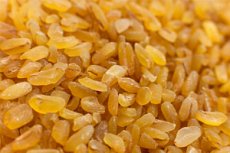
Bulgur may be considered a reasonable food for those prone to constipation, but it's not a proven treatment. Current official recommendations for constipation emphasize not one "right grain," but rather sufficient dietary fiber, fluids, gradual dietary changes, and, if necessary, medications with proven efficacy. Whole grains are among the best sources of dietary fiber, and bulgur falls into this category. [1]
From a practical standpoint, bulgur is interesting because it's not a refined side dish, but a whole grain product made from cracked wheat that contains dietary fiber and is generally easy to incorporate into the diet. The USDA's nutritional advisory resource explicitly describes bulgur as a fiber-rich whole grain that cooks quickly and is convenient for everyday use. [2]
According to the U.S. National Agricultural Library, 100 grams of cooked bulgur contains approximately 4.5 grams of dietary fiber. Compared to the recommended adult intake of 22-34 grams of dietary fiber per day, this is a significant contribution, especially when compared not to legumes but to common side dishes that people choose instead of whole grains. But even this amount doesn't make bulgur a "healing porridge" in and of itself. [3]
The main caveat is that major guidelines don't single out bulgur as a specifically studied food for the treatment of chronic constipation. They focus more broadly on whole grains and dietary fiber. Therefore, it's more accurate to consider bulgur as part of a sensible diet for constipation, rather than a food with its own strong clinical basis. [4]
The most accurate conclusion is that bulgur can help with mild to moderate constipation as a convenient source of dietary fiber, especially if the diet has previously been low in whole grains. However, in chronic idiopathic constipation, long-term symptoms, or warning signs, its role remains supportive, not primary. [5]
| Question | Practical answer |
|---|---|
| Is bulgur a cure for constipation? | No |
| Can bulgur help with constipation? | Yes, as part of the diet |
| Why is it interesting? | It is a whole grain source of dietary fiber. |
| Is bulgur alone enough? | More often than not no |
| When his role is most logical | With low initial intake of dietary fiber |
| When you need a different level of help | For chronic, severe or bothersome constipation |
Source for table: National Institute of Diabetes and Digestive and Kidney Diseases guidelines, American Gastroenterological Association guidelines, and USDA data. [6]
What makes bulgur work at all?
The primary mechanism is related to dietary fiber. The National Institute of Diabetes and Digestive and Kidney Diseases (NIDDK) notes that dietary fiber helps with constipation, and good sources include whole grains. When the diet is richer in these foods, stools tend to retain more water and move more easily through the intestines. [7]
In this regard, bulgur appears healthier than many common refined side dishes because it retains more of the whole grain's components. The USDA specifically emphasizes that whole grain products contain all parts of the grain—the husk, germ, and endosperm—and therefore retain more nutrients and dietary fiber than refined grain products. Bulgur is described there as cracked wheat from the whole grain. [8]
Another important factor is gradual action. Bulgur does not act as an irritant laxative. Its potential benefit stems from the fact that it increases the overall level of dietary fiber in the diet. This is why the National Institute of Diabetes and Digestive and Kidney Diseases recommends adding dietary fiber gradually to allow the body time to adapt. [9]
Not only the grain itself is important for intestinal health, but also water. The same official source emphasizes that water and other liquids help dietary fiber function better, and stool becomes softer and easier to pass. Bulgur without a proper fluid intake is usually less effective than bulgur as part of a comprehensive dietary adjustment. [10]
Finally, bulgur can also help indirectly – as a substitute for side dishes lower in dietary fiber. If a person begins to eat whole-grain bulgur with vegetables and legumes more often instead of refined and low-volume dishes, not only one meal but the entire daily nutritional profile improves. For constipation, this cumulative effect is often more important than the "magic" effect of a single food item. This is already a sound clinical rationale, based on recommendations to increase the proportion of whole grains and dietary fiber. [11]
| Property of bulgur | Why is this important for constipation? |
|---|---|
| Whole grain base | Helps increase the proportion of dietary fiber in the diet |
| About 4.5 g of dietary fiber per 100 g of finished product | This is a significant contribution to the daily goal. |
| Neutral taste and quick cooking | It's easier to eat regularly |
| Pairs well with vegetables and legumes | Conveniently enhances the overall nutritional profile |
| It is not an irritating laxative. | Works gently, through diet |
Source for table: US National Agricultural Library, US Department of Agriculture, and US National Institute of Diabetes and Digestive and Kidney Diseases. [12]
What the latest guidelines say and where the evidence lies
There's a nuance that's often overlooked here. The U.S. National Institute of Diabetes and Digestive and Kidney Diseases continues to recommend adequate dietary fiber and lists whole grains among its good sources. At a basic level, this makes bulgur a logical choice for those prone to constipation. [13]
But more recent evidence-based assessments of diet for chronic constipation have become more rigorous. In 2025, the British Dietetic Association reported that general recommendations for a "high-fiber diet in general" were insufficiently supported for the treatment of chronic idiopathic constipation, although specific dietary strategies, such as 2-3 kiwis per day and mineral-rich water, were more strongly supported. This is a crucial correction for any article about grains and vegetables. [14]
The American Gastroenterological Association and the American College of Gastroenterology also approached the issue cautiously in 2023. In their guidelines, dietary fiber, especially in supplement form, was conditionally recommended, based on low or very low-quality evidence, while polyethylene glycol received a strong recommendation. This means that diet is important, but for chronic constipation, increasing fiber alone is not always sufficient. [15]
This leads to a fair conclusion about bulgur. It fits well into basic dietary recommendations, but it's not one of those foods for which there's strong evidence specifically supporting therapeutic intervention for chronic idiopathic constipation. In a practical sense, it's a good side dish, but not a standalone treatment strategy for severe constipation. [16]
This approach doesn't devalue bulgur, but rather places it in its proper place. In mild cases, when a person eats few whole grains and few vegetables, bulgur can be a useful step. But if symptoms persist for weeks or months, expecting bulgur to have an effect comparable to that of an evidence-based drug would be a mistake. [17]
| Statement | How justified is it? |
|---|---|
| Whole grains are beneficial sources of dietary fiber. | Well reasoned |
| Bulgur is suitable as one of the whole grain side dishes. | Justified |
| Bulgur has been shown to be effective in treating chronic constipation. | No |
| A general high-fiber diet always solves chronic constipation. | No |
| Chronic idiopathic constipation may require medication. | Yes |
| Bulgur is best viewed as a supporting product. | Yes |
Source for table: US National Institute of Diabetes and Digestive and Kidney Diseases, British Dietetic Association, American Gastroenterological Association, and American College of Gastroenterology. [18]
How to use bulgur for constipation so it makes sense
Bulgur makes sense not as a "medical portion," but as part of a regular diet. If it appears on the menu 3-5 times a week in place of less desirable side dishes and is combined with vegetables, legumes, and adequate fluids, it is much healthier than an occasional large serving of bulgur without other dietary changes. This approach is consistent with the logic of official recommendations for constipation. [19]
It's crucial not to increase dietary fiber intake abruptly. The National Institute of Diabetes and Digestive and Kidney Diseases recommends increasing it gradually. Otherwise, even a healthy food can cause discomfort, such as bloating, increased gas, and a feeling of heaviness. Bulgur is no exception. [20]
From a practical standpoint, bulgur works best when paired with other sources of dietary fiber, such as chickpeas, lentils, beans, vegetables, and greens. This isn't just a culinary tip, but a logical consequence of the fact that official recommendations list whole grains, legumes, fruits, and vegetables as good sources of dietary fiber. The more varied this selection, the easier it is to reach your daily fiber goal. [21]
It's important to remember the contraindications for the product itself, not just constipation. Bulgur is wheat. Official resources from the USDA explicitly list it as cracked wheat, and the US Food and Drug Administration reminds us that gluten is found in wheat, barley, and rye. Therefore, bulgur is not suitable for people with celiac disease, wheat allergies, and some other gluten-related conditions. [22]
Finally, bulgur shouldn't displace water. People often try to "treat constipation with fiber" but drink little fluid. The National Institute of Diabetes and Digestive and Kidney Diseases (NID) emphasizes that water and other fluids help dietary fiber work better. Without this, even a good whole grain product often produces a more modest effect than expected. [23]
| Practical technique | Why is it important? |
|---|---|
| Eat bulgur regularly, not occasionally. | So it really changes the nutritional profile. |
| Increase volume gradually | Less risk of bloating and discomfort |
| Combine with vegetables and legumes | It's easier to get your daily fiber intake |
| Drink enough water | Dietary fiber works better |
| Do not use if you have celiac disease or wheat allergy. | Bulgur is a wheat product. |
Source for table: National Institute of Diabetes and Digestive and Kidney Diseases, U.S. Department of Agriculture, U.S. Food and Drug Administration. [24]
When bulgur is no longer enough and a doctor is needed
The National Institute of Diabetes and Digestive and Kidney Diseases defines constipation as a condition characterized by fewer than three bowel movements per week, hard, dry, or lumpy stools, painful passage, or a feeling of incomplete evacuation. If these symptoms persist, bulgur is no longer considered a sufficient measure, even if it improves the diet. [25]
The same official source lists warning signs that require immediate medical attention: rectal bleeding, blood in the stool, persistent abdominal pain, inability to pass gas, vomiting, fever, lower back pain, and weight loss without trying to lose weight. In such situations, choosing the right grains becomes a secondary consideration. [26]
Constipation may also be related to more than just diet. The National Institute of Diabetes and Digestive and Kidney Diseases lists slow colonic transit, pelvic floor disorders, functional gastrointestinal disorders, and certain medications as possible causes. Therefore, a product that seems logical for "dietary" constipation may make little difference if the underlying cause is completely different. [27]
In chronic idiopathic constipation, modern guidelines allow, and sometimes even recommend, switching to drug therapy. In a document from the American Gastroenterological Association and the American College of Gastroenterology, polyethylene glycol received a strong recommendation, while dietary fiber was only conditionally recommended. This once again emphasizes that the role of bulgur is nutritional, not medicinal. [28]
The final practical position appears to be calm. Bulgur is a good dietary product for those prone to constipation. But if symptoms are persistent, severe, accompanied by alarming signs, or do not improve with self-care, the challenge is no longer choosing between bulgur and another grain, but rather getting examined promptly and not missing a serious cause. [29]
| Situation | The role of bulgur |
|---|---|
| Mild occasional constipation | Can be a useful part of self-help |
| Not enough whole grains in the diet | Particularly logical |
| Chronic constipation lasting weeks and months | Insufficient as a sole measure |
| Blood in the stool or abdominal pain | A medical assessment is needed |
| Inability to pass gas, vomiting, fever | Urgent help |
| Constipation due to medications or other illnesses | We need to find the cause |
Source for table: National Institute of Diabetes and Digestive and Kidney Diseases and American Gastroenterological Association guidelines. [30]
FAQ
Is it okay to eat bulgur every day if you're prone to constipation?
Yes, as long as it's well-tolerated and part of a varied diet, rather than replacing all other sources of dietary fiber. When it comes to constipation recommendations, the overall daily fiber and fluid balance is more important than the "magic" of one food item. [31]
Is bulgur better than white rice for constipation?
From a clinical perspective, bulgur seems more logical because it's a whole grain and provides a significant amount of dietary fiber. But that doesn't mean it alone will cure chronic constipation. [32]
How much dietary fiber is in bulgur?
According to the U.S. National Agricultural Library, 100 grams of cooked bulgur contains about 4.5 grams of dietary fiber. This is a good amount for a side dish, but not so high that you can rely on it alone. [33]
Can you eat bulgur if you're bloated?
It's okay to eat it occasionally, but you should increase the amount gradually. Increasing fiber too quickly can increase gas and discomfort, so the National Institute of Diabetes and Digestive and Kidney Diseases recommends increasing it gradually. [34]
Is bulgur suitable for celiac disease?
No. Bulgur is a wheat product, and the U.S. Food and Drug Administration lists gluten as found in wheat, barley, and rye. [35]
When should you stop experimenting with cereals and see a doctor?
When there's blood in the stool, persistent abdominal pain, inability to pass gas, vomiting, fever, effortless weight loss, or self-care measures that don't work. These are official warning signs that require medical evaluation. [36]
Key points from experts
Eirini Dimidi, PhD, a registered dietitian and nutritionist, is a lecturer in the Department of Nutrition at King's College London and a researcher on chronic constipation.
Her work is important because it helps move away from the overly general formula of "just eat more fiber." The current dietary guidelines she helped develop point to a clear conclusion: for chronic constipation, it's not just any fiber that's important, but specific strategies with real evidence support. For bulgur, this means a reasonable, but not overly emphasized, place in the diet. [37]
Lin Chang, MD, a gastroenterologist at UCLA Health, specializes in chronic constipation and gut-brain disorders, and co-author of a joint guideline on chronic idiopathic constipation.
From a clinical perspective, her approach emphasizes the key point: nutrition is important, but in persistent chronic constipation, moving to more evidence-based approaches should not be delayed. Bulgur is appropriate as part of a diet, but not as a substitute for comprehensive treatment if symptoms persist. [38]
William D. Chey, MD, professor of gastroenterology and nutrition, chief of the Division of Gastroenterology and Hepatology at the University of Michigan, is a co-author of a guideline on chronic idiopathic constipation.
His position aligns well with the practical logic of this topic: first, it is worth assessing the presence of warning signs, then trying to build a rational dietary basis, and if this is insufficient, moving on to evidence-based therapy. Against this background, bulgur is a useful nutritional tool, but not a central treatment for chronic constipation. [39]