
Medical expert of the article

New publications
Black cumin for psoriasis: Does Nigella sativa help and what does evidence-based medicine say?
Last updated: 04.04.2026

All iLive content is medically reviewed or fact checked to ensure as much factual accuracy as possible.
We have strict sourcing guidelines and only link to reputable media sites, academic research institutions and, whenever possible, medically peer reviewed studies. Note that the numbers in parentheses ([1], [2], etc.) are clickable links to these studies.
If you feel that any of our content is inaccurate, out-of-date, or otherwise questionable, please select it and press Ctrl + Enter.
Psoriasis is a chronic inflammatory skin disease with a systemic nature, and current clinical guidelines view it not as a "cosmetic problem," but as a condition requiring long-term monitoring, severity assessment, and treatment tailored to the level of disease activity. Current recommendations from the UK's National Institute for Health and Care Excellence and the American Academy of Dermatology continue to rely primarily on topical therapy, phototherapy, and systemic treatments, rather than herbal supplements. [1]
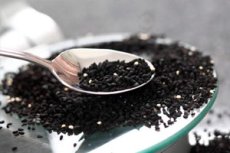
Black cumin, or Nigella sativa, has long been a staple of traditional medicine and is frequently discussed online as a "natural anti-inflammatory." Interest in it stems primarily from thymoquinone, which has been shown to have antioxidant, anti-inflammatory, and immunomodulatory properties in laboratory and preclinical studies. However, for patients, something more important is that laboratory potential does not equal clinically proven treatment, especially for psoriasis. [2]
What is important to understand right away
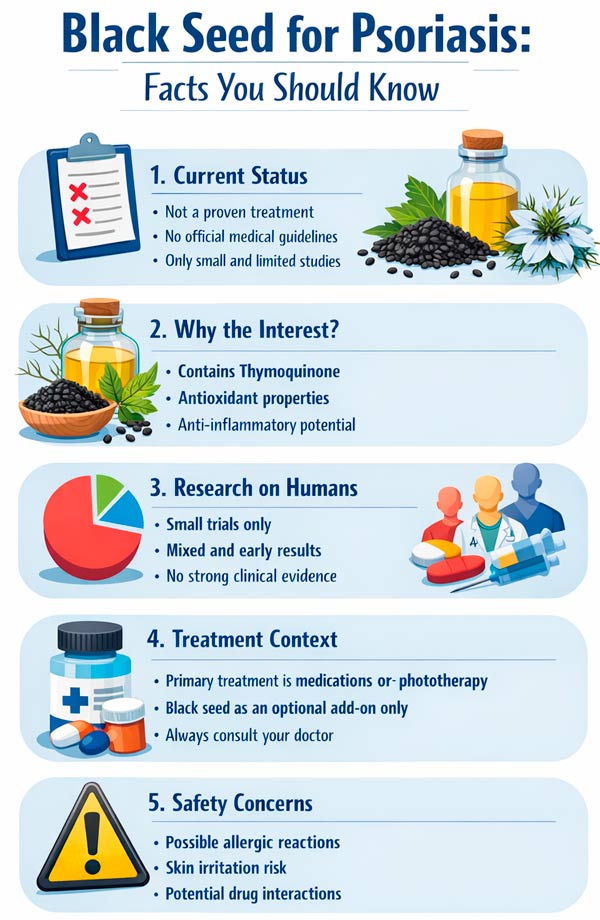
The main honest conclusion is this: black cumin cannot be considered a standard or proven treatment for psoriasis. The American Academy of Dermatology's current policy on alternative medicine explicitly states that due to insufficient evidence or conflicting results, recommendations for such remedies for the treatment of psoriasis are not made. [3]
This is particularly important because psoriasis has well-studied treatment options. For milder cases, topical medications are used, while for more severe or persistent cases, phototherapy, systemic medications, and biological therapy are considered. Black cumin is not included in these main treatment options, either in the guidelines of the American Academy of Dermatology, the recommendations of the National Institute for Health and Care Excellence in the UK, or in the European living guideline EuroGuiDerm. [4]
The reason isn't that the plant is "definitely useless," but that the clinical evidence is still too weak. There's biological logic, there are small studies, there are interesting results in animal models, but there's no large, modern, multidisciplinary, and well-confirmed evidence base that would allow black cumin to be considered on par with standard therapy. [5]
In practice, this means something simple. If a person with psoriasis wants to discuss black cumin, it should be considered only as a possible supplement, not as a replacement for prescribed treatment. Trying to "go natural" and discontinue a treatment regimen without a doctor's advice is especially risky for widespread plaques, rapid exacerbations, severe itching, cracks, and lesions of the palms, soles, or nails. [6]
Another important point is that psoriasis is highly variable. While one person's condition may remain relatively calm for years, another's quickly spirals out of control. Therefore, even if a particular patient feels that oil or capsules "soften the skin," this does not mean that the treatment actually suppresses inflammation sufficiently to prevent relapses and complications as reliably as standard therapy. [7]
| The key question | What is known now |
|---|---|
| Is black cumin a standard treatment for psoriasis? | No |
| Are there any recommendations from specialized guides? | No, no recommendation is made due to insufficient or inconsistent data. |
| Is there biological logic? | Yes, due to thymoquinone and other components |
| Are there clinical signals of benefit? | Yes, but they are limited to small and old studies. |
| Can they replace prescribed therapy? | No |
| Realistic place of means | Only as a discussion supplement, not an alternative |
Sources for the table: [8]
Why did interest in black cumin arise in the first place?
Black cumin, or Nigella sativa, contains several groups of biologically active substances, with thymoquinone often considered the most important. A safety and composition review indicates that the seeds and oil contain fatty acids, volatile oils, alkaloids, saponins, and other compounds, with thymoquinone considered one of the main active components. [9]
From a psoriasis pathogenesis perspective, this is an attractive possibility, as inflammatory cytokines, oxidative stress, abnormal immune cell activation, and accelerated keratinocyte division play a significant role in the disease. The Memorial Sloan Kettering Cancer Center notes laboratory data on Nigella sativa's antioxidant and anti-inflammatory effects, including through the inhibition of cyclooxygenase and lipoxygenase. [10]
A 2024 review of nanoformulations of thymoquinone for psoriasis summarized preclinical results, which showed that different forms of thymoquinone delivery in animal models reduced redness, scaling, epidermal thickness, inflammation, and cytokine levels. The authors of this review explicitly state that preclinical results appear promising, but clinical trials are still rare. [11]
There's another reason why there's so much buzz around this topic. The composition of commercial oils and extracts varies significantly, meaning the same term "black cumin" can conceal products with different concentrations of active ingredients, varying degrees of purification, and varying irritant potential. This is why online stories don't translate well to real-world medicine: a person may be using a completely different product from the one used in the study. [12]
Therefore, black cumin does have biological plausibility, and it shouldn't be completely ignored. But it shouldn't be overestimated either: there's a very long way between "a substance is effective in cells or mice" and "a product works reliably in a psoriasis patient in a clinical setting." This is precisely the distance that Nigella sativa has yet to reach. [13]
| Why is black cumin useful for psoriasis? | What does this mean in practice? |
|---|---|
| Thymoquinone is considered the main active component | There is a plausible biological mechanism |
| Antioxidant properties have been noted | Theoretically, it may influence oxidative stress. |
| Anti-inflammatory effects have been noted | Theoretically, it may reduce the inflammatory response. |
| There are good results in preclinical models. | This is not yet equivalent to proven benefits in humans. |
| The composition of the products varies greatly | Results cannot be automatically transferred to any purchased drug. |
Sources for the table: [14]
What research has shown in humans
The most frequently cited clinical trial in psoriasis was published in 2014. It involved 60 patients with mild to moderate plaque and palmoplantar psoriasis who were randomized to 3 groups: 10% Nigella sativa ointment, 500 milligram capsules 3 times daily, or a combination of the topical and oral forms for 12 weeks.[15]
According to the authors, the topical form resulted in complete clearance of lesions, with an excellent or good response in 65% of patients; the oral form resulted in a good response in 50%; and the combination of the topical and oral forms resulted in complete clearance of lesions, with an excellent or good response in 85%. Four weeks after stopping treatment, the relapse rate was 31% for the ointment, 50% for the capsules, and 18% for the combination. Within the study itself, tolerability was good, and the authors did not record any side effects. [16]
Against this backdrop, the treatment does appear promising, but the study has many limitations. The study is small, single-center, and outdated by the standards of modern psoriasis therapy. It doesn't answer the key question of 2026: whether black cumin is superior to, or at least a consistent complement to, current standard regimens in broad patient populations. This study alone is clearly insufficient to change clinical practice. [17]
A 2025 review of natural compounds in psoriasis cited other signals, including an older study from the same research school, in which a combination of Nigella sativa and methotrexate appeared superior to individual treatments, as well as a small case series of a combination herbal preparation that included black cumin. However, these data remain fragmentary, heterogeneous, and do not allow us to separate the effect of black cumin itself from the effects of the combinations, patient selection, and design factors. [18]
This is consistent with the broader picture of Nigella sativa in medicine. In a 2023 review of systematic reviews and meta-analyses, only 1 study was of moderate methodological quality, 4 were of low quality, and 15 were of critically low quality, and of the 110 outcomes assessed, only 5 were of moderate quality evidence, while 88 were of very low quality. In other words, for black cumin in general, there are many promising publications but little solid evidence. [19]
| Study | Design | What did we get? | How to interpret this |
|---|---|---|---|
| A 2014 randomized trial | 60 patients, 12 weeks, external form, capsules, combination | The best results come from the combination, then from the external form | There is a signal of benefit, but the study is too small to draw firm conclusions. |
| 2025 Natural Remedies Outlook | Summary of clinical and preclinical data | Confirms the presence of individual positive signals | Does not replace high-quality large-scale testing |
| 2023 Review of Systematic Reviews | Quality assessment of meta-analyses on Nigella sativa | Most of the evidence is of low or very low quality | There are no grounds for firm clinical recommendations yet. |
Sources for the table: [20]
How does this relate to actual psoriasis treatment?
In real-life dermatology, decisions are made not based on the principle of "natural or non-natural," but rather on disease control and safety. The American Academy of Dermatology emphasizes that, in mild to moderate cases, many cases can be successfully managed with topical agents, and topical corticosteroids, vitamin D analogs, keratolytics, and other topical agents remain among the basic approaches. [21]
As the disease progresses, the standard of care changes. The UK's National Institute for Health and Care Excellence identifies topical therapy, phototherapy, and systemic treatment as key treatment modalities, while the American Academy of Dermatology specifically highlights methotrexate, apremilast, cyclosporine, acitretin, and biologics in the relevant sections of its guidelines. [22]
Against this background, black cumin can only be discussed as an additional step in an already established and controlled regimen. Such a discussion is possible with a patient with a stable course of treatment, if there is a desire to try the supplement with the clear understanding that this is an experimental, not a standard, approach, and that an objective assessment will be based on the condition of the plaques, itching, affected area, and frequency of relapses, not on sensations during the first three days. [23]
This approach should not be used as a substitute for proven treatment, especially if the disease is actively worsening, affects functionally important areas, or significantly impairs quality of life. Herbal remedies in such situations are dangerous not only because of their unpredictability but also because they can delay the onset of truly effective therapy. This is precisely the case when "harmless naturalness" can cost weeks or months of uncontrolled inflammation. [24]
The rational approach is to first assess the severity of the disease and the current treatment regimen, then discuss with a dermatologist whether there is any room for such an addition, and only then make a decision. With this approach, black cumin is not considered a "cure for psoriasis," but rather a possible adjunct with a limited evidence base and mandatory tolerability monitoring. [25]
| Situation | The most reasonable approach |
|---|---|
| Mild stable psoriasis | The basis is made up of standard external agents; additions are discussed only as a secondary step |
| Moderate to severe psoriasis | Systemic therapy or phototherapy needs to be assessed according to guidelines |
| The desire to try black cumin | Only as a supplement, not a replacement. |
| Rapid deterioration, cracks, severe inflammation | Do not experiment on your own, but consult your doctor to adjust your treatment. |
| The effect seems "good" in feel | An objective assessment of the durability of the result and relapses is still needed. |
Sources for the table: [26]
Security, limitations and practical algorithm
Overall, Nigella sativa is considered relatively well-tolerated, and the LiverTox database indicates that black seed in commercial supplements is typically sold in oil, powder, and capsule forms, and that the typical marketed range is 300 to 1,000 milligrams once or twice daily. However, it's important to understand that this range applies to the supplement market as a whole and is not a proven dose specifically for the treatment of psoriasis.[27]
Based on available clinical data, side effects are most often mild and transient and include abdominal discomfort, bloating, unpleasant taste, diarrhea, and headache. However, the Memorial Sloan Kettering Cancer Center warns of possible allergic reactions with topical application of pure oil and of potential interactions via cytochrome P450 enzyme systems, the clinical significance of which is not fully understood but should not be ignored. [28]
A particular risk is associated with applying the oil to the skin. The literature describes not only common allergic contact dermatitis but also severe acute skin reactions after topical application of Nigella sativa oil. In a case series published in JAMA Dermatology, patients had extensive lesions, and positive patch tests confirmed the causative role of the oil. This is especially important for people with already inflamed, damaged, and vulnerable skin due to psoriasis. [29]
This leads to a rule of thumb: Self-administering undiluted or untested oils to active psoriatic plaques is unwise, as commercial products vary widely in composition, and the risk of irritation and sensitization is real. If considering such a treatment at all, it's safer to first evaluate the product's ingredients, discuss it with your doctor, and remember that a sample from a study and a bottle from an online store can be completely different. [30]
The bottom line on safety is this: black cumin does not appear to be highly toxic in itself, but it cannot be considered a "completely harmless natural oil." The risk of drug interactions, variability in composition, poor standardization, and the potential for severe skin reactions make it a remedy that requires caution, especially in the case of psoriasis. [31]
| Security issue | What is known |
|---|---|
| General tolerability | Generally good, but that doesn't cancel out individual reactions |
| Common side effects | Gastrointestinal discomfort, bloating, diarrhea, headache, rash |
| External use of pure oil | Allergic and even severe skin reactions are possible. |
| Drug interactions | Possible, including through the liver's enzyme systems |
| A reliable "therapeutic" dose for psoriasis | Not installed |
| The most common mistake | Replacing a proven treatment with an herbal supplement |
Sources for the table: [32]
FAQ
Does black cumin help with psoriasis?
There may be an effect, but the evidence is limited. Currently, there are only small clinical signals and preclinical data, not a proven standard of treatment. [33]
Can it replace hormonal ointments or other prescribed therapy?
No. Professional guidelines do not recommend replacing proven treatments with alternatives for which there is no sufficient and consistent evidence base. [34]
Which looks more promising: oil or capsules?
In the most cited study, the best results were achieved with a combination of topical and oral forms, followed by the topical form alone. However, this is one small study, so it cannot be used as a definitive guide for all patients. [35]
Does black cumin have a proven effective dose specifically for psoriasis?
No. A 2014 study used a 10% ointment and 500-milligram capsules three times daily, but this is not enough to consider this regimen proven and universal. [36]
Can black cumin be taken with methotrexate or biological therapy?
This should not be done on your own. Interactions are theoretically possible, and there is insufficient high-quality data on the combination with modern regimens, so this decision should be made by a doctor. [37]
Can black cumin worsen skin conditions?
Yes, it can. Allergic contact dermatitis, including severe skin reactions after topical application, has been reported for Nigella sativa oil. [38]
Who should avoid self-medication with black cumin?
Those with rapidly progressing illnesses, those with already severe skin inflammation, those taking multiple medications, and those who have previously had reactions to essential oils or herbal remedies. This approach requires at least minimal medical supervision. [39]
What's the most sobering conclusion for a patient?
Black cumin can be discussed as a possible supplement, but not as a full-fledged alternative to proven therapy. The more active the psoriasis, the less room there is for independent experimentation. [40]
Key points from experts
April W. Armstrong, MD, MPH, professor and chief of the Division of Dermatology at the University of California, Los Angeles.
The practical conclusion, consistent with current guidelines, is that decisions regarding psoriasis should be based on evidence-based therapies, and alternative approaches should not take the place of standard treatment until sufficient data are available. This is directly consistent with the position of the alternative medicine section of the American Academy of Dermatology guidelines, which does not recommend such treatments due to insufficient or inconsistent evidence. [41]
Joel M. Gelfand, MD, MS, CE, is a professor of dermatology and epidemiology and director of the Center for Clinical Sciences in Dermatology and the Psoriasis and Phototherapy Center at the University of Pennsylvania.
The clinical implications of his research and leadership in psoriasis align well with one thesis: psoriasis requires systemic and long-term control, not short-term symptom relief at any cost. Therefore, any supplement, including black cumin, should be evaluated not by marketing promises, but by its actual impact on the disease and its compatibility with existing therapy. [42]
Alexander Nast, MD, professor, head of the Evidence-Based Medicine Unit and consultant dermatologist at the Charité in Berlin, is a leading contributor to EuroGuiDerm.
The European view, reflected in the EuroGuiDerm living guide, boils down to a hierarchy of evidence and treatment based on the severity of the condition. Against this background, black cumin remains an interesting but insufficiently proven approach, while actual treatment still revolves around standard topical, phototherapeutic, and systemic methods. [43]
Conclusion
Black cumin for psoriasis is not a myth, but it is also not a proven treatment. It has biologically plausible mechanisms, one small clinical study with encouraging results, and preclinical data on thymoquinone, but this is still insufficient for a confident recommendation for routine practice. [44]
The most accurate position today is that black cumin should only be considered as a debatable adjunct in individual patients and only without discontinuing standard therapy. The more severe, active, and widespread the psoriasis, the less reason to rely on it and the more important treatment according to current clinical guidelines. [45]