Medical expert of the article
New publications
Preparations
Sodium: Salt, Blood Pressure, and Fluid Balance
Last updated: 18.09.2025
All iLive content is medically reviewed or fact checked to ensure as much factual accuracy as possible.
We have strict sourcing guidelines and only link to reputable media sites, academic research institutions and, whenever possible, medically peer reviewed studies. Note that the numbers in parentheses ([1], [2], etc.) are clickable links to these studies.
If you feel that any of our content is inaccurate, out-of-date, or otherwise questionable, please select it and press Ctrl + Enter.
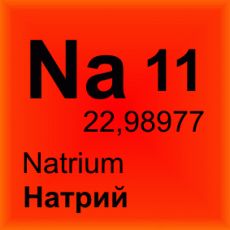
Sodium is a soft, silvery metal that is rarely found in nature in its pure form. In everyday life, it is usually referred to not as "sodium" but as "salt," although chemically, salt is a compound of sodium and chlorine, or sodium chloride. It is the sodium in salt that is responsible for most of its physiological effects and the problems associated with excess. [1]
Sodium is a vital electrolyte in the human body. It helps retain water where it's needed, participates in the transmission of nerve impulses, muscle function, and the maintenance of blood pressure. Without sodium, normal cellular function is impossible, so nature has built powerful mechanisms into the body to conserve it. Humans evolved in conditions of salt deficiency, so the body is excellent at conserving it but poor at managing excess. [2]
The paradox of modern nutrition is that sodium deficiency is extremely rare today, while excess has become the norm. Most people consume two to three times more sodium than international organizations recommend. The World Health Organization advises adults not to exceed 2,000 milligrams of sodium per day, which is approximately equivalent to 5 grams of table salt. Actual consumption in various countries often exceeds 3,400 milligrams per day. [3]
Excessive sodium consumption is primarily associated with high blood pressure and an increased risk of cardiovascular disease. Large reviews show that the more sodium in the diet, the higher the average blood pressure in the population, and reducing consumption to approximately 2,000 milligrams per day helps reduce the risk of stroke and heart attack. This is especially important for people with hypertension, heart disease, and kidney disease. [4]
At the same time, sodium remains an essential element. The question isn't about eliminating it completely, but rather about bringing consumption back within physiological limits and reducing the amount of "hidden" sodium from processed foods and medications.
Table 1. Sodium and Salt: Basic Facts
| Parameter | Meaning |
|---|---|
| What is sodium usually found in? | Mainly in the form of table salt (sodium chloride) |
| The main role of sodium | Water-salt balance, nerve impulses, muscle and vascular function |
| Recommendation for adults | Less than 2000 mg sodium per day (less than 5 g salt) |
| Real consumption in many countries | Often more than 3400 mg of sodium per day |
| The main risk of excess | High blood pressure and cardiovascular disease |
The role of sodium in the body: why you can't live without it
Sodium is the major cation in extracellular fluid. This means it is found in highest concentrations outside cells—in the blood and intercellular spaces. Because of this, sodium determines how much water is present in the vascular bed and how much in the tissues. Even small changes in sodium concentration lead to fluid redistribution and fluctuations in blood pressure, edema, or, conversely, dehydration. [5]
Sodium's classic function is to participate in the so-called sodium-potassium pump. This is a protein in the cell membrane that "pumps" sodium out of the cell and "pumps" potassium in. This creates an electrical potential that carries nerve impulses. Every movement, thought, and heartbeat is the result of the coordinated movement of sodium and potassium ions across membranes. [6]
Sodium also influences acid-base balance. Together with bicarbonates and other buffers, it helps maintain blood pH within a very narrow range. When acidity shifts, the kidneys alter the excretion of sodium and associated ions to return the pH to normal. Therefore, severe sodium imbalances inevitably affect the acid-base balance. [7]
Along with chloride, sodium is involved in the absorption of water and nutrients in the intestines. Many glucose and amino acid transport mechanisms rely on the combined movement of sodium and dissolved substances in water. This is why, during diarrhea and vomiting, solutions with a specific glucose-to-sodium ratio are used to replenish losses—this allows the body to retain fluid more effectively. [8]
Sodium also plays a role in regulating hormonal systems. The renin-angiotensin-aldosterone system and the hormone vasopressin constantly monitor sodium concentration and blood volume, altering the excretion of salt and water by the kidneys. When there's excess salt, the body tries to eliminate the excess, but with chronic overload, these mechanisms fail to cope, and high blood pressure persists. [9]
Table 2. Main physiological functions of sodium
| Function | Brief description | What does the violation lead to? |
|---|---|---|
| Water-salt balance | Determines the distribution of water between blood and tissues | Edema, dehydration, pressure fluctuations |
| Nerve impulses | Participates in the generation and conduction of electrical signals | Convulsions, impaired consciousness, weakness |
| Work of muscles and heart | Ensures contractility of muscle cells | Heart rhythm disturbances, decreased contraction force |
| Acid-base balance | An element of buffer systems and kidney function | pH shift, deterioration of enzyme function |
| Absorption of nutrients | Transport of glucose and amino acids in the intestine | Increased effects of diarrhea and vomiting with deficiency |
The main sources of sodium in the diet: from the salt shaker to processed foods
Many people believe the main source of sodium is the salt shaker on the table. In fact, the majority of sodium comes not from adding salt to prepared dishes, but from processed and ready-to-eat foods. Research in various countries shows that 60% to 80% of sodium comes from industrially processed and restaurant foods. Homemade salting accounts for a smaller share, although it still shouldn't be underestimated. [10]
Foods high in sodium include bread and baked goods, sausages and hot dogs, cheeses, sauces, prepared sauces and dressings, canned goods, ready-made meals, snacks, and fast food. Even foods that don't seem salty can contain significant amounts of salt. For example, white bread, breakfast cereals, and packaged entrees often provide tens of percent of the daily sodium requirement in just one meal. [11]
A separate category is carbonated drinks and sauces, the recipes for which use sodium as a preservative or flavor enhancer. This includes many commercially produced sauces, bouillon cubes, and ready-made marinades. For someone who rarely adds salt to their food but frequently consumes such products, the overall sodium load may remain high. [12]
Salt added during cooking and at the table also plays a role, but it's easier to control. If you cook at home with fresh ingredients and salt your dishes moderately, the bulk of your sodium intake is usually reduced automatically. The problem is that a strong salty taste habit develops over years and is maintained by the constant consumption of processed foods. [13]
Finally, natural foods containing sodium without added salt also contribute to some level of sodium intake. These include milk, meat, fish, eggs, and some vegetables. Their contribution is usually moderate and not considered a problem, provided the diet as a whole is not overloaded with industrial salt. The primary focus in prevention is on reducing processed foods. [14]
Table 3. Major sources of sodium in the modern diet
| Source | Examples | Estimated contribution to total consumption |
|---|---|---|
| Processed and packaged foods | Bread, sausages, cheeses, sauces, canned goods, fast food | About 60-80% of total sodium |
| Restaurant and fast food products | Pizza, burgers, French fries, fast food | Significant contribution due to large portions and high salinity |
| Homemade salting | Salt in cooking and at the table | A smaller but significant share, especially if you have the habit of adding salt |
| Drinks and sauces | Carbonated drinks, bouillon cubes, marinades, ready-made sauces | "Hidden" sodium that is often underestimated |
| Natural products | Meat, milk, eggs, some vegetables | Usually a moderate contribution, rarely a problem in itself |
How Much Sodium Do You Need? Standards, Limits, and Pitfalls
Most adults need about 1,500-2,000 milligrams of sodium per day to function properly. The World Health Organization and other major organizations recommend not exceeding 2,000 milligrams of sodium, which is equivalent to about 5 grams of table salt. This is a general ceiling, not a minimum target, meaning levels near or slightly below this value are optimal. [15]
Some countries have set somewhat more lenient upper limits—up to 2,300 milligrams of sodium per day for adults—but even there, it is emphasized that lower levels, closer to the World Health Organization's recommendations, provide better protection against hypertension and cardiovascular events. Meta-analyses show that reducing sodium intake to below 100 millimoles per day (approximately 2,300 milligrams), combined with a diet rich in fruits and vegetables, significantly reduces blood pressure. [16]
For children, the recommended limits are lower and depend on age and energy expenditure. Typically, for children over 2 years old, the same 2,000 milligrams of sodium is recommended, but with downward adjustments based on body weight and calorie needs. It's important not to accustom a child to very salty tastes from an early age, as taste preferences become ingrained over the years. [17]
Some people believe that reducing salt intake too much will inevitably lead to sodium deficiency. In practice, sodium deficiency in healthy people due to merely moderate salt restriction is virtually unheard of. A normal diet containing vegetables, grains, protein products, and minimal processed foods almost always covers the minimum physiological requirement. [18]
Another pitfall is trying to compensate for salt reduction by adding "low-sodium" processed foods while maintaining the overall diet. Simply replacing some processed foods with others, even slightly less salty ones, doesn't address the core problem. The greatest benefit comes not only from reducing sodium, but also from a general shift toward less processed foods and a greater proportion of plant foods. [19]
Table 4. Recommended levels of sodium intake
| Group | Recommended maximum sodium intake | Salt equivalent |
|---|---|---|
| Adults (according to the World Health Organization) | Up to 2000 mg per day | Up to 5 g of salt per day |
| Adults (a number of national recommendations) | Up to 2300 mg per day | Up to 5.8 g of salt per day |
| Children 2-15 years old | Below 2000 mg, adjusted for weight and age | Proportionally lower than in adults |
| People with hypertension and heart disease | Aim for a range of 1500-2000 mg | About 4-5 grams of salt per day or less, as recommended by a doctor |
| The level at which the risk of disease increases | Long-term consumption of more than 2300-2500 mg | More than 6 g of salt per day for years |
Sodium, Blood Pressure, and the Heart: Where the Danger Line Is
The link between high sodium intake and high blood pressure is considered one of the most convincingly proven in preventive medicine. Numerous studies and meta-analyses show that the more sodium in the diet, the higher the average blood pressure, and that reducing salt intake leads to a significant, though not immediate, reduction in systolic and diastolic pressure. [20]
High blood pressure, in turn, is a leading risk factor for stroke, heart attack, heart failure, and chronic kidney disease. Reducing sodium intake is considered one of the most cost-effective measures for reducing the burden of noncommunicable diseases on a national scale. According to the World Health Organization, every unit of monetary investment in sodium reduction programs yields a multiple return in terms of prevented cardiovascular events. [21]
People with pre-existing hypertension, heart failure, diabetes, chronic kidney disease, and the elderly are particularly sensitive to sodium. In these individuals, excess sodium increases blood pressure more significantly, while a small reduction in salt intake produces a more noticeable effect. Research shows that most patients with heart disease, despite recommendations, still consume twice as much sodium as they should. [22]
In recent years, there has been debate about whether too much sodium restriction can be harmful, especially at very low intake levels. Some observational studies have shown a U-shaped relationship between sodium and outcomes. However, upon closer analysis, it becomes clear that people with very low salt intake often have severe illnesses, leading to decreased appetite and changes in diet. The general consensus remains: moving from high levels to a range of approximately 1,500–2,000 milligrams of sodium reduces risks. [23]
Other effects of excess sodium should not be forgotten. It increases the load on the kidneys, promotes thickening of the vascular walls, and can accelerate calcification when combined with mineral metabolism disorders. In patients with certain critical conditions, very high doses of sodium, such as those infused with hypertonic saline, have been shown to increase the risk of acute kidney injury. [24]
Table 5. Sodium and cardiovascular risks
| Factor | What happens when you have too much sodium? | Clinical consequences |
|---|---|---|
| Blood pressure | The average pressure level increases | Increased risk of stroke and heart attack |
| The wall of blood vessels | Increased rigidity and tendency to thicken | Acceleration of atherosclerosis |
| Heart | The load on the myocardium increases | Development and progression of heart failure |
| Kidneys | The volume of circulating blood and the filtration load increase | Acceleration of kidney function deterioration |
| Overall mortality | High sodium intake is associated with a higher incidence of cardiovascular events. | Increased overall mortality according to large studies |
Sodium imbalance: hyponatremia and hypernatremia
When discussing sodium, excess dietary intake is usually discussed. However, at the blood level, not only dietary habits are important, but also kidney health, hormonal systems, and body water volume. Too little sodium in the blood is called hyponatremia, while too much is called hypernatremia. Both conditions are dangerous and often require immediate medical attention. [25]
Hyponatremia most often occurs with excess water due to salt loss or a disruption of the hormone vasopressin. It is caused by severe vomiting and diarrhea, certain diuretics, heart and kidney failure, the syndrome of inappropriate secretion of antidiuretic hormone, and excessive water intake, including cases where an athlete drinks too much fluid without electrolytes during prolonged exercise. Symptoms include headache, nausea, weakness, confusion, seizures, and even coma. [26]
Hypernatremia, on the other hand, is more often associated with water deficiency or impaired thirst sensation. It is observed in dehydration in the elderly, young children, patients in intensive care units, and people with limited access to water. Symptoms are related to brain dehydration: intense thirst, irritability, muscle twitching, seizures, impaired consciousness, and the risk of coma and death in severe cases. [27]
It's important to understand that these conditions don't arise from simply trying to "eat less salt" within reasonable guidelines. They develop from a combination of serious illnesses, water imbalances, and improper or unsupervised treatment. Self-administered attempts to "remove excess salt" with aggressive diuretics or excessive water drinking without medical supervision can become a dangerous trigger. [28]
If symptoms such as severe weakness, confusion, seizures, or severe headache occur, especially in the context of recent illnesses, diuretic use, or a sudden change in fluid intake, immediate medical attention is required. Treatment of sodium imbalance is strictly monitored by laboratory tests, as correcting sodium levels too quickly can also be dangerous for the brain. [29]
Table 6. Hyponatremia and hypernatremia: key differences
| Parameter | Hyponatremia (low sodium in the blood) | Hypernatremia (too much sodium in the blood) |
|---|---|---|
| The main mechanism | Excess water relative to sodium or loss of salts | Lack of water relative to sodium |
| Common causes | Diuretics, cardiac and renal failure, severe diarrhea, excessive drinking of water | Dehydration, limited drinking, thirst disturbances, uncompensated water loss |
| Main symptoms | Headache, nausea, confusion, seizures | Intense thirst, agitation or drowsiness, seizures |
| Without treatment | Risk of cerebral edema and coma | Risk of dehydration and coma |
| Treatment | Careful correction of sodium and water under the control of tests | Gradual fluid replenishment and correction of causes |
Hidden sodium in drugs and special risk groups
Sodium is found not only in food but also in some medications. In recent years, evidence has accumulated that high-sodium medications, especially effervescent tablets, dissolving powders, antacids, and some forms of pain relievers, can significantly increase daily sodium intake. For people with hypertension and cardiovascular disease, this is an additional, often underestimated, source of risk. [30]
British and other European regulators emphasize that adults should not regularly exceed 6 grams of salt per day, and they remind people that some of this salt may come from medications. Studies have shown that patients taking sodium-containing medications long-term have a higher risk of cardiovascular events compared to people taking the same active ingredients without sodium. [31]
Patients with hypertension, heart failure, chronic kidney disease, and liver cirrhosis should be especially careful. For them, any "excess" salt leads to additional fluid retention, worsening edema, and increased blood pressure. Therefore, when choosing medications, it's important to consult with your doctor and pharmacist to learn about the sodium content and possible alternative forms. [32]
High-risk groups also include the elderly, for whom the combination of a reduced sense of thirst, a tendency toward dehydration, and a high salt load is particularly dangerous, and patients on strict low-sodium diets. In such individuals, even seemingly "harmless" effervescent vitamin tablets can significantly impact sodium balance. [33]
The solution here isn't to completely avoid all sodium-containing medications, but to make an informed choice. If there's a salt-free alternative, it makes sense to choose it, especially for long-term use. It's important for doctors and patients to take sodium in medications as seriously as they do sodium in food. [34]
Table 7. Hidden sodium: what to look out for
| Source | Where to look for sodium | For whom it is especially important to take into account |
|---|---|---|
| Effervescent tablets | Painkillers, vitamins, cold medications | People with high blood pressure and heart failure |
| Powders for dissolution | Antacids, heartburn medications, cold medications | Patients with chronic kidney and liver disease |
| Infusion solutions | Some solutions for intravenous administration | For patients in hospitals, especially in intensive care |
| Combination drugs | A "do it all" product with a pleasant taste | For the elderly and people on a strict salt-free diet |
| Combination with a salty diet | Sodium levels are rising unnoticed. | Anyone who already has risk factors for cardiovascular disease |
Practical steps: how to tame sodium without going overboard
The most effective and realistic step is to reduce the proportion of ultra-processed foods in your diet. This doesn't mean completely eliminating everything industrial, but it does suggest basing your diet on vegetables, fruits, whole grains, legumes, nuts, natural dairy products, fish, and meat without excess salt. This alone typically reduces sodium intake by hundreds of milligrams per day without causing a "salt craving." [35]
It's helpful to learn to read labels. Packaging typically lists the sodium or salt content per 100 grams of the product and per serving. It's important to remember: 1 gram of sodium equals approximately 2.5 grams of salt. Products with more than 1.2 grams of salt per 100 grams are considered high-salt. When choosing, it makes sense to choose options with lower sodium or salt content, especially if the product is consumed regularly. [36]
A moderate reduction in salt in cooking is almost always well-tolerated, especially if done gradually. The flavor of dishes can be enhanced by spices, herbs, garlic, lemon juice, and dry pan-frying before sautéing. This approach prevents recipes from feeling bland, and acclimation to the less salty taste develops within a few weeks. [37]
It's especially helpful to limit the most "salty traps"—chips, croutons, ready-made sauces, bouillon cubes, highly salted cheeses, sausages, fast food, and frequent restaurant consumption. Such foods should be viewed as a rare treat, not a daily staple. This is especially important for people with hypertension, heart failure, diabetes, and chronic kidney disease. [38]
Finally, it's important to consider sodium in the context of the rest of your lifestyle. A balanced diet with plenty of plant foods, adequate potassium intake, a healthy weight, no smoking, and regular physical activity reduces the impact of sodium on blood pressure and heart health. The goal isn't to "fear salt," but to stop it from being a hidden and constant burden on the body. [39]
Table 8. Sodium Control Quick Checklist
| Step | Specific action |
|---|---|
| 1 | Reduce the proportion of processed foods, fast food and ready-made sauces |
| 2 | Read labels and choose foods with less salt |
| 3 | Gradually reduce the amount of salt in cooking and at the table |
| 4 | Replace some of the salt with spices, herbs, and acid (lemon, tomatoes) |
| 5 | Pay attention to sodium in medications, especially effervescent forms. |
| 6 | Monitor your blood pressure and discuss your sodium intake target with your doctor. |