
Medical expert of the article

New publications
Cytology during pregnancy: when it's needed, what it shows, and how to interpret the results
Last updated: 17.04.2026

All iLive content is medically reviewed or fact checked to ensure as much factual accuracy as possible.
We have strict sourcing guidelines and only link to reputable media sites, academic research institutions and, whenever possible, medically peer reviewed studies. Note that the numbers in parentheses ([1], [2], etc.) are clickable links to these studies.
If you feel that any of our content is inaccurate, out-of-date, or otherwise questionable, please select it and press Ctrl + Enter.
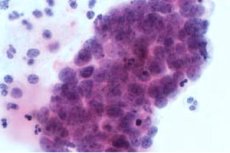
Cytology during pregnancy is a study of cervical cells, historically known as the Papanicolaou test. Its purpose is not to "look for pregnancy" or "assess the baby," but to promptly detect cellular changes associated primarily with oncogenic types of human papillomavirus and precancerous processes of the cervix. The National Cancer Institute of the United States emphasizes that cytology helps detect precancerous changes and sometimes cancer itself, and modern screening programs increasingly combine or replace it with testing for human papillomavirus. [1] [2]
This is where a key modern nuance arises. In many countries, cytology is no longer always the sole or primary test for routine screening, as testing for oncogenic types of human papillomavirus (HPV) plays an increasingly important role. However, during pregnancy, cytology remains crucial, whether as a stand-alone test, as part of a comprehensive testing program, or as a follow-up test after a positive HPV test. [3] [4]
Pregnancy does not eliminate the risk of precancerous changes in the cervix. Moreover, for some women, pregnancy is the only time they are even subject to regular medical monitoring. This is why modern guidelines increasingly view the prenatal period as a real opportunity to avoid missing long-overdue screening. [5] [6]
However, the approaches of different countries do not completely coincide. Australian guidelines state that if a screening is overdue or due, the test can be safely performed during pregnancy if the correct instrument is used. The British healthcare system, by contrast, often allows for routine testing to be postponed until approximately three months after birth in the case of a routine invitation, but emphasizes that repeat testing after a previously abnormal result is possible during pregnancy. [7] [8] [9]
Therefore, the question of whether cytology is necessary during pregnancy does not have a single, universal answer. It depends on age, previous test history, timing of the last examination, the presence of symptoms, local screening regulations, and whether it is a routine invitation or monitoring of an already identified abnormality. Modern medicine has moved away from the crude principle of "do it for everyone" or "postpone it for everyone" and has moved toward a more precise risk assessment. [10] [11] [12]
Table 1. What is understood today by cytology during pregnancy. [13] [14]
| Question | A modern answer |
|---|---|
| What is being researched? | Cervical cells |
| The main goal | Early detection of precancerous and cancerous changes |
| Is this a pregnancy test? | No |
| Is this always the only screening test? | No, it is increasingly used in conjunction with the human papillomavirus test or as a clarification step |
| Is it necessary for all pregnant women? | No, the decision depends on the timing of the last screening and the clinical situation. |
When is a study really necessary and when can it be postponed?
The first thing assessed at the appointment is a woman's cervical screening history. If a woman presents pregnant and has not had a preventive examination in a while, many modern programs recommend not waiting until after delivery but performing screening during pregnancy, especially if her due date has already passed. Australian clinical guidelines specifically recommend checking the screening history during antenatal care and offering the test to those who should have had it earlier or are already past their due date. [15] [16]
If it's a purely routine invitation without risk factors, some systems allow for a postponement. The UK National Health Service advises that for a routine invitation during pregnancy, a doctor or nurse may suggest postponing the test and rescheduling it approximately three months after the baby's birth. This doesn't mean cytology testing during pregnancy is risky, but rather reflects the program's organizational approach. [17]
A completely different situation arises if there has already been an abnormal result and a repeat test is required. In this case, postponing the test until after childbirth is often not recommended. The British system explicitly states that a repeat test after a previous abnormal result can be performed during pregnancy, and international guidelines for abnormal cervical testing do not consider pregnancy a reason to ignore a significant risk. [18] [19]
A separate category are women with symptoms. If there is suspicious bleeding after intercourse, a visibly altered cervix, unusual persistent discharge, or a clinical suspicion of a tumor process, this is no longer a routine population screening, but a diagnostic evaluation. Australian materials emphasize that symptomatic women may require a combined examination with cytology and human papillomavirus testing, rather than the standard routine algorithm. [20]
Finally, age also matters, because screening strategies themselves vary by age group. The National Cancer Institute of the United States indicates that in the 21-29 age group, only cytology every 3 years is still routinely acceptable, while in the 30-65 age group, either the human papillomavirus test, combined testing, or cytology every 3 years is used. Therefore, for a pregnant woman, the decision to test is based not only on the fact of pregnancy itself, but also on the age-specific screening route. [21] [22]
Table 2. When cytology is most often needed during pregnancy, and when it is most often postponed. [23] [24]
| Situation | A typical modern approach |
|---|---|
| The screening is long overdue. | It is most often suggested to be performed during pregnancy. |
| A normal, routine invitation without any additional factors | In some programs it can be carried over to the postpartum period |
| A repeat test is required after the previous abnormal result. | Usually not ignored or automatically postponed |
| There are symptoms from the cervix | A diagnostic, not just a screening, assessment is needed. |
| Pregnancy without complaints and with a recent normal screening in the past | Additional cytology is usually not necessary. |
How is a smear taken during pregnancy and how safe is it?
Technically, the procedure is similar to a routine screening outside of pregnancy. The cervix is examined with a speculum, and a sample of cells is carefully removed for the laboratory. The National Cancer Institute describes the standard collection as a short procedure using a soft brush or small spatula to obtain cells from the cervix. [25]
The main question for patients is usually: "Will this trigger a miscarriage or bleeding?" Current Australian guidelines and patient materials from Cancer Council Australia answer this quite clearly: cervical screening during pregnancy is considered safe and has not been associated with an increased miscarriage rate. Therefore, for women with overdue screening, pregnancy is not considered an absolute reason to postpone everything. [26] [27]
However, safe doesn't mean without its caveats. During pregnancy, the cervix is more vascular and bleeds more easily upon contact. Therefore, it's important to use the right instrument and technique. Australian guidelines for doctors specifically state that an endocervical brush should not be inserted into the cervical canal due to the risk of associated bleeding. [28]
Another recent change is the option to self-collect a vaginal sample for HPV testing in some programs. Australian clinical guidelines indicate that pregnant women eligible for screening can be offered a self-collection vaginal swab for HPV. However, it's important to understand the limitation: this sample is collected from the vagina, not the cervix, so it can't immediately assess cellular changes. Even with a positive result, a clinician often still needs to obtain a sample for cytology. [29] [30]
In practice, this means that safety depends not only on the decision to "do or not do" but also on how the test is performed. Careful technique, avoiding traumatic instruments in the cervical canal, and understanding when a basic HPV test is sufficient and when a full cellular assessment is needed allow for the examination to be performed without unnecessary risk and without loss of information. [31] [32]
Table 3. Safety and technique of cytology during pregnancy. [33] [34]
| Question | Current data |
|---|---|
| Is the procedure safe overall? | Yes, with the right technique |
| Is it linked to the proven increase in miscarriage rates? | No |
| Why does contact spotting sometimes occur? | Due to increased vascularity of the cervix |
| What is especially important technically | Do not insert the endocervical brush into the cervical canal. |
| Is it possible to use self-collection? | In some programs, yes, but this is primarily a way to test for the human papillomavirus |
Why Pregnancy Complicates Pap Test Interpretation
Pregnancy changes the cervix not only externally but also at the cellular level. A 2024 review of cytology and precancerous changes in pregnancy emphasizes that hormonal and anatomical changes complicate the interpretation of smears, and the pathologist must be aware that the sample was taken from a pregnant patient. This is not a formality, as some cells normal for pregnancy can mimic pathology. [35]
One of the common causes of diagnostic difficulties is so-called navicular cells, as well as increased mucus secretion, endocervical epithelial hyperplasia, and immature metaplasia associated with eversion of the transformation zone. A 2024 review showed that these changes can resemble cells with viral changes or even more serious pathology if the context of pregnancy is not taken into account. [36]
Further confusion is caused by cells with an Arias-Stella reaction, decidual cells, and, less commonly, trophoblast cells. These may appear atypical and sometimes lead to false alarm regarding glandular or squamous cell lesions. The review emphasizes that pregnancy should be specifically mentioned in the referral, otherwise the risk of overdiagnosis increases. [37]
But the opposite risk is also important. If a pathologist or clinician is too lax about the pregnant cervix and attributes everything to "hormones," they can miss a true high-grade lesion or even invasive cancer. Therefore, the modern logic is not to be less attentive, but to interpret the material taking into account the physiological changes of pregnancy and, if in doubt, correctly refer for colposcopy. [38] [39]
For this reason, pregnancy doesn't reduce the diagnostic value of cytology to zero, but it does increase the demands on the quality of collection and the skill of interpretation. A good smear during pregnancy remains useful; it simply can't be read as mechanically as in a non-pregnant woman mid-cycle. Modern reviews and clinical guidelines agree that the combination of "accurate collection, accurate clinical information, and experienced cytological evaluation" is particularly important here. [40] [41]
Table 4. What physiological changes during pregnancy most often interfere with cytology interpretation. [42]
| Change | What can he pretend to be? |
|---|---|
| Navicular cells | Cells with viral changes |
| Endocervical epithelial hyperplasia | Glandular atypical process |
| Immature metaplasia | More serious squamous cell lesion |
| Arias-Stella reaction | Glandular precancer or cancer |
| Decidual and trophoblastic cells | High-risk atypical cells |
What do abnormal results mean and when is a colposcopy needed?
An abnormal Pap smear during pregnancy does not necessarily indicate cancer. The National Cancer Institute of the United States reminds that most abnormal screening results are associated with either the human papillomavirus or early cellular changes that require clarification, monitoring, or treatment, but do not constitute an invasive tumor. This is also true during pregnancy. [43] [44]
Current guidelines believe that pregnancy does not alter the natural history of human papillomavirus infection sufficiently to warrant fundamentally different risk thresholds. In 2024, the American Society of Colposcopy and Cervical Pathology explicitly stated that abnormal results in pregnant women are based on the same risk-based thresholds as in non-pregnant women, but with consideration of treatment restrictions during pregnancy. [45]
If the risk of significant cervical involvement is high, colposcopy is necessary. The American Society of Colposcopy and Cervical Pathology recommends colposcopy during pregnancy if the immediate risk of severe cervical involvement is 4% or greater. If a particularly high risk or cancer is suspected, a more rapid referral is required, and if an invasive process is suspected, a consultation with a gynecologic oncologist may be necessary. [46] [47]
A very important modern conclusion is that colposcopy with biopsy during pregnancy is considered safe when indicated. The American Society of Colposcopy and Cervical Pathology writes that biopsy when clinically indicated is not associated with adverse surgical or obstetric outcomes. However, it is advisable to have it performed by a specialist who is skilled in assessing the cervix during pregnancy, as the risk of diagnostic errors is higher. [48]
However, there are procedures that are avoided during pregnancy. A 2024 review and recommendations from the Colposcopy Society emphasize that endocervical curettage, expedited excision without biopsy confirmation, and "direct removal" treatments are generally unacceptable during pregnancy. The primary goal of diagnostics during this period is not to immediately treat precancerous lesions at any cost, but to avoid missing invasive cancer. [49] [50]
Table 5. When colposcopy is most often needed during pregnancy. [51] [52]
| Situation | Typical solution |
|---|---|
| Very low risk and little change | Frequent observation according to protocol |
| High risk of severe injury | Colposcopy during pregnancy |
| Suspected glandular lesion | Early in-depth examination |
| Suspected invasive process | Urgent referral to a specialist |
| The need for biopsy according to indications | Acceptable and considered safe |
What to do if significant changes are confirmed
The most important principle of modern care is not to automatically treat precancerous cervical lesions during pregnancy simply because they are detected. The American Society of Colposcopy and Cervical Pathology emphasizes that accelerated treatment during pregnancy is not recommended, and excision is generally acceptable when cancer is suspected. This differs significantly from approaches outside of pregnancy, where accelerated treatment is possible in some patients at a very high-risk stage. [53]
If a severe squamous cell lesion or glandular lesion at the level of adenocarcinoma in situ is confirmed during pregnancy, active surveillance is usually chosen. The American Society for Colposcopy and Cervical Pathology recommends colposcopic surveillance and age-appropriate screening every 12 to 24 weeks, with the interval being individualized based on the gestational age, the experience of the colposcopist, and the risk of loss to follow-up. [54]
A 2024 review of pregnancy and precancerous cervical lesions emphasizes that regression of such lesions after delivery is common, while progression to invasive cancer during pregnancy remains rare. Regression is particularly common for low-grade lesions, and it is also possible for severe lesions, although at lower rates. These data underlie a more conservative approach during pregnancy. [55]
This doesn't mean the situation can be taken lightly. A repeat biopsy is necessary if the lesion appears worse, signs of invasion appear, or the colposcopic findings are more worrisome than before. However, if there are no obvious signs of progression, a repeat colposcopy can be postponed until after delivery. This balance between oncological alertness and obstetric safety is now considered the standard. [56]
The quality of patient routing becomes crucial. A pregnant woman with abnormal cytology does not need to be "urgently cauterized," but rather see a specialist who can distinguish between physiological changes of pregnancy, true precancer, and suspected cancer. Proper routing is more important here than a hasty procedure. [57] [58]
Table 6. Modern tactics for confirmed changes in the cervix during pregnancy. [59] [60]
| Clinical situation | The basic approach |
|---|---|
| Low degree of cellular changes | More frequent observation |
| Severe squamous cell lesion | Colposcopic observation during pregnancy |
| High-risk glandular lesion | Observation by an experienced specialist, often an oncogynecologist |
| Suspected invasive cancer | Diagnostic deepening without delay |
| No signs of progression | Treatment is usually delayed until after delivery. |
What is important after childbirth and why the postpartum period is often decisive
The postpartum period is often crucial, as it's then that the question is decided whether changes have resolved, persisted, or require full treatment. The American Society for Colposcopy and Cervical Pathology recommends postpartum colposcopy no sooner than 4 weeks after delivery. This is necessary to allow the cervix to partially recover from childbirth. [61]
For a routine screening test, the timing may be later. Cancer Council Australia recommends waiting at least six weeks after delivery, and preferably around three months, because testing too early yields more unsatisfactory results: there may not be enough cells, and the cervix itself may still be inflamed from pregnancy and childbirth. This is important, as testing too early is sometimes ineffective and only creates additional anxiety. [62]
If a severe lesion was confirmed during pregnancy, the postpartum examination should be especially comprehensive. The American Society of Colposcopy and Cervical Pathology states that if a lesion is visible after delivery, excision or a full diagnostic workup may be necessary: cytology, human papillomavirus testing, colposcopy, and biopsy. If no visible lesions are present, a full diagnostic workup is still recommended. [63]
It's crucial not to get lost after discharge from the maternity hospital. The postpartum period is often a vulnerable time: a woman is busy with the baby, putting off her checkups, and temporarily regressed or simply untreated changes remain unchecked. This is why modern recommendations place such emphasis on discussing the postpartum care plan during pregnancy. [64] [65]
The practical conclusion here is very simple. A cytology test during pregnancy is not a one-time event, but part of a process that sometimes continues after childbirth. The most common error is not that a smear was taken during pregnancy, but that the woman did not undergo proper postpartum follow-up after detecting changes. [66] [67]
Table 7. Postnatal follow-up after cytology during pregnancy. [68] [69]
| Postpartum situation | What is usually recommended |
|---|---|
| A colposcopy is needed after an abnormal result. | Not earlier than 4 weeks after birth |
| A routine screening test is needed | Not earlier than 6 weeks, better around 3 months |
| During pregnancy there was a severe lesion | Complete diagnostic monitoring after childbirth |
| Visible damage persists | Biopsy and/or excision are being discussed. |
| There are no complaints, but there were significant deviations during pregnancy. | Observation is still necessary |
FAQ
Is it possible to have a cytology test during pregnancy?
Yes, with proper technique, it is considered a safe test. Current Australian data clearly indicate that cervical screening during pregnancy is safe and is not associated with an increased miscarriage rate. [70] [71]
Is it possible to have a little bleeding after a smear?
Some contact bleeding is possible because the cervix is more vascular during pregnancy. This is why careful sampling and avoiding inserting an endocervical brush into the cervical canal are so important. [72]
If I get an abnormal result, is it cancer?
No. Most abnormal results indicate the presence of the human papillomavirus or cellular changes that require further investigation and monitoring, but are not cancer. The goal of further testing is to understand the true risk level. [73] [74]
Is a colposcopy safe during pregnancy?
Yes, and a biopsy, if indicated, is also considered safe. However, it is advisable to have this examination performed by a specialist who is experienced in assessing the cervix during pregnancy. [75]
Is cervical precancer treated during pregnancy?
Usually not. If invasive cancer is not suspected, treatment is often postponed until after delivery, and observation is carried out during pregnancy. [76] [77]
When is the best time to repeat the examination after childbirth?
For routine screening, it's best to wait at least 6 weeks, and optimally about 3 months. If a postpartum colposcopy is needed after a significant abnormal result, it's usually scheduled no earlier than 4 weeks after childbirth. [78] [79]
Key points from experts
Rebecca Perkins, MD, MS, is a professor of obstetrics and gynecology at Tufts School of Medicine. Her work focuses on cervical screening and the management of abnormal results. The practical implication of her expert line is that screening today is no longer just about classic cytology: the decision must take into account age, test history, and overall risk, including during pregnancy. [80] [81] [82]
Sangini Sheth, MD, MPH, is an associate professor of obstetrics, gynecology, and reproductive sciences at the Yale School of Medicine. She reviewed the 2024 American Society of Colposcopy and Cervical Pathology practice statement on abnormal screening tests in pregnancy. The key takeaway from this expert position is that pregnancy is not a reason to ignore significant risk, but it is also not a reason to rush to treatment when observation is safer. [83] [84] [85]
Peter Sasieni, Professor of Cancer Epidemiology and Co-Director of the Center for Screening, Prevention, and Early Detection at the Wolfson Institute for Population Health, is a professor of cancer epidemiology and co-director of the Center for Screening, Prevention, and Early Detection at the Wolfson Institute for Population Health. His work on cervical screening is important for understanding a key population principle: the effectiveness of a program depends not only on the test itself but also on proper spacing, routing, and follow-up. This is especially important for pregnancy, because errors often occur not at the smear collection stage, but rather during improper transfer or loss of postpartum follow-up. [86] [87]
Final practical conclusion
Cytology is not prohibited during pregnancy and is not considered inherently dangerous. However, the modern approach has become more nuanced: in some cases, a routine test can be rescheduled, in others, it makes sense to perform it during pregnancy, while an abnormal result requires not panic but competent risk-based management, often with colposcopy and almost always with well-planned postpartum follow-up. [88] [89] [90] [91]