
New publications
Vaping during pregnancy has been linked to dangerous sleep conditions in cases of sudden infant death.
Last updated: 16.08.2026

All iLive content is medically reviewed or fact checked to ensure as much factual accuracy as possible.
We have strict sourcing guidelines and only link to reputable media sites, academic research institutions and, whenever possible, medically peer reviewed studies. Note that the numbers in parentheses ([1], [2], etc.) are clickable links to these studies.
If you feel that any of our content is inaccurate, out-of-date, or otherwise questionable, please select it and press Ctrl + Enter.
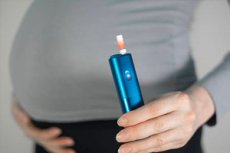
Maternal vaping was found to be a common cause of sudden unexpected infant death (SUID) in New Zealand, particularly in cases where the infant directly shared a bed with an adult. In a new case series, researchers analyzed 101 deaths that occurred in the country in 2022-2023. The overall incidence of SUID was 0.87 cases per 1,000 live births.
The most detailed information on maternal nicotine exposure and sleep conditions was available for 66 cases. In this subgroup, maternal smoking was recorded in 51.5% of cases, vaping in 30.3%, and smoking and/or vaping in 72.7%. Among infants who died while co-sleeping, maternal vaping was present in approximately half of the cases, compared to approximately one in five of the remaining cases. This difference was statistically significant.
Even more remarkable was the combination of two factors. Among deaths occurring during immediate co-sleeping, 84.8% were associated with maternal smoking or vaping. The authors consider this signal sufficient grounds for serious consideration of the potential role of nicotine, regardless of its delivery method.
However, the study does not prove that e-cigarettes cause sudden infant death syndrome. It is a case series without a control group of healthy children. Therefore, it is impossible to determine the relative risk of vaping, separate its effects from smoking, co-sleeping, social factors, and other circumstances, or establish a causal relationship. The authors themselves emphasize the need for a separate, large-scale study on this issue.
| Key results | Meaning |
|---|---|
| Sudden Unexpected Infant Death Cases in 2022-2023 | 101 |
| General frequency | 0.87 per 1000 live births |
| Cases with detailed data on nicotine and sleep | 66 |
| Maternal smoking | 51.5% |
| Maternal vaping | 30.3% |
| Smoking and/or vaping | 72.7% |
| All cases that occurred during direct co-sleeping | 72.3% |
| When co-sleeping + smoking or vaping | 84.8% |
| The Link Between Vaping and Co-Sleeping | p = 0.003 |
What exactly did the researchers study?
The study was a New Zealand case series of sudden unexpected deaths in infancy over two calendar years – 2022 and 2023. The authors used coronial data and collected information on family sociodemographic characteristics, the child's last sleep conditions, body position, co-sleeping, and maternal cigarette and e-cigarette use.
In total, the researchers identified 101 cases. They estimated this corresponded to 0.87 sudden unexpected deaths for every 1,000 live births in New Zealand. More detailed, specialized reports, allowing for a simultaneous assessment of nicotine exposure and sleep conditions, were available for 66 cases, not the entire sample.
The obtained figures were compared with the results of earlier New Zealand studies—the renowned New Zealand Cot Death Study of 1987-1990 and the National Sudden Unexpected Infant Death Study of 2012-2015. This allowed the authors to examine not only the current situation but also how the circumstances of such deaths have changed over several decades.
This is fundamentally different from a classic case-control study. To calculate the actual risk, we need to know how common vaping, smoking, co-sleeping, and their combinations are among comparable families in which the child did not die. The new study did not include such a control group, so any figures should be viewed as a description of the pattern of deaths that have already occurred, rather than a direct measurement of the risk for all infants.
| Characteristics of the study | Data |
|---|---|
| Country | New Zealand |
| Period | 2022-2023 |
| Design | Series of cases |
| Source of information | Coroner's data |
| Total deaths | 101 |
| Detailed SUDI Liaison Reports | 66 |
| Main factors | Ethnicity, sleeping, bed sharing, smoking, vaping |
| Historical comparison | 1987-1990 and 2012-2015 |
| Control group | No |
| Is it possible to calculate the risk ratio of vaping? | No |
The most noticeable result is a rapid increase in the proportion of deaths during co-sleeping.
In the current series, 72.3% of sudden deaths occurred in immediate co-sleeping situations. The authors cite this finding as one of the most notable findings of the study.
By comparison, in a New Zealand study from 1987-1990, about 24% of deaths occurred during direct co-sleeping. In the 2012-2015 national study, this proportion rose to 57.5%, and in 2022-2023, it reached 72.3%. Thus, despite decades of prevention campaigns, the proportion of deaths occurring during direct co-sleeping has consistently increased.
However, the presence of a crib or a special device for safer sleep did not guarantee its use. The authors report that approximately 54% of families had a special in-bed sleep device at home, but the infant was not necessarily in it during their last nap.
It's also important to distinguish between the concept of co-sleeping and its particularly dangerous combinations. Previous New Zealand studies have shown that the combination of co-sleeping and maternal smoking during pregnancy is associated with a significantly higher risk than either factor alone. This is why the new possible combination—co-sleeping plus maternal vaping—has attracted particular attention from researchers.
| The proportion of SUDI during direct co-sleeping | Indicator |
|---|---|
| 1987-1990 | 24.0% |
| 2012-2015 | 57.5% |
| 2022-2023 | 72.3% |
| Direction of change | Significant increase |
Vaping has been found to be particularly common in co-sleeping situations.
The most recent part of the study concerns e-cigarettes. In a subset of 66 cases, maternal vaping was recorded in 30.3% of families. This doesn't mean that 30% of pregnant women in New Zealand vape; this study focused exclusively on women from a small series of sudden infant death syndrome cases.
When the authors divided the cases by sleep circumstances, a significant difference emerged. Among deaths involving direct co-sleeping, maternal vaping was recorded in approximately half of the cases, compared to approximately one-fifth of deaths without direct co-sleeping. The statistical probability that this difference arose by chance was low: p = 0.003.
Meanwhile, among deaths involving direct co-sleeping, maternal smoking or vaping was present in 84.8% of cases. The authors consider this level of nicotine exposure alarming, especially given the well-established interaction between regular smoking and co-sleeping.
But it's especially important not to confuse the proportion of children who died with the probability of death in an exposed child. For example, the figure of 84.8% doesn't translate into an 84.8% risk of death from co-sleeping and vaping. It simply means that, of the deaths that have already occurred in this category, the mothers reported smoking or vaping in almost 85% of cases. A control sample is needed to determine the absolute and relative risk.
| Nicotine exposure among 66 detailed cases | Share |
|---|---|
| Mother's smoking | 51.5% |
| Mother's vaping | 30.3% |
| Smoking and/or vaping | 72.7% |
| Vaping among co-sleeping cases | about 50% |
| Vaping without co-sleeping | about 20% |
| Smoking/vaping among co-sleeping deaths | 84.8% |
| Vaping and co-sleeping are statistically linked. | p = 0.003 |
Why do researchers suspect nicotine?
Regular cigarettes and e-cigarettes deliver nicotine in very different ways. When smoking, a woman is simultaneously exposed to tobacco combustion products, carbon monoxide, and a host of other substances. When using an e-cigarette, the toxic profile differs, but nicotine can be present in both. Therefore, the authors wonder whether some of the risk may be related not only to smoke but also to nicotine exposure itself.
The authors note that nicotine can cross the placenta. In a related publication, they review data on the effects of nicotine on fetal blood flow, birth weight, and the developing respiratory and arousal regulatory systems. One hypothesis being considered is a possible alteration in the infant's ability to awaken and resume breathing in a dangerous situation.
This hypothesis is biologically plausible, as prenatal nicotine exposure has been linked in experimental and physiological studies to changes in autonomic regulation, hypoxia response, and arousal mechanisms. However, the new study did not measure brain physiology, respiratory responses, or nicotine levels in children. Therefore, the mechanism remains hypothetical for these 101 cases.
Therefore, it's more accurate to speak not of proof that "vaping causes arousal defects," but rather of the emergence of an epidemiological signal that is consistent with existing knowledge about nicotine and requires verification. The authors propose viewing pregnancy as a situation in which the goal should be to minimize nicotine exposure, regardless of the delivery method.
| Possible path | What is supposed |
|---|---|
| Nicotine crosses the placenta | The fetus is directly exposed |
| Impact on the developing nervous system | Changes in respiratory regulation are possible |
| Change in response to oxygen deficiency | May impair protective physiological responses |
| Awakening disorder | Considered as a potential vulnerability mechanism |
| Is this mechanism proven by the new work? | No |
| What the study showed | Only association of exposure with circumstances of deaths |
Smoking remains a significantly better-established risk factor
Unlike vaping, the association between maternal smoking during pregnancy and sudden infant death syndrome (SIDS) has been confirmed by numerous previous studies. In the new series, smoking was recorded in 51.5% of mothers in 66 cases with complete exposure data.
The combination of smoking and co-sleeping is considered particularly dangerous. In a previous national New Zealand study from 2012-2015, the adjusted odds ratio for sudden death in children with both smoking during pregnancy and co-sleeping was 32.8, compared to children not exposed to either of these two factors. This was a case-control study, so it allowed for a much better risk assessment than the new case series.
The new study doesn't attempt to reiterate the risks of tobacco use. Its more important question is whether e-cigarettes are beginning to replace traditional smoking among mothers, especially in families where other risky sleep patterns persist.
This also has implications for prevention messages. If a woman completely quits smoking cigarettes but continues to receive nicotine through e-cigarettes, the risk from combustion products may be reduced, but the potential effects of nicotine itself on the fetus and infant are not completely eliminated. The new study cannot determine how much this affects the risk of sudden cardiac death.
Ethnic inequality turned out to be enormous
The overall incidence of sudden unexpected death in infancy in 2022–23 was 0.87 per 1000 live births, but the mean value masked extremely large differences between population groups.
Among Māori children, the rate was 1.97 per 1,000 live births, while among Pacific children it was 0.91 per 1,000. For European-descended infants, it was only 0.17 per 1,000, while among Asians it was approximately 0.07 per 1,000. Thus, the rate among Māori was more than ten times higher than among European-descended infants.
The authors note that ethnic inequality not only persists but, in their opinion, is increasing. When comparing the current series with earlier New Zealand studies, more Māori and Pacific infants were found among the deceased.
However, such differences cannot be interpreted as a biological characteristic of ethnicity. The study describes the distribution of deaths and associated circumstances, not genetic causation. Previous New Zealand literature attributes differences in SUDI largely to the differential prevalence of modifiable and social risk factors, including tobacco, housing conditions, and sleep practices.
| Group | SUDI per 1000 live births |
|---|---|
| Māori | 1.97 |
| Pacific | 0.91 |
| European | 0.17 |
| Asian | 0.07 |
| All of New Zealand | 0.87 |
Most deaths occurred in the first months of life.
Age also showed a characteristic distribution. About 63.4% of cases occurred in children under 13 weeks old, meaning the highest concentration of deaths was observed in the first three months of life.
This is consistent with broader knowledge about sudden infant death syndrome (SIDS): infancy represents a period of particular physiological vulnerability, when mechanisms controlling breathing, arousal, and thermoregulation are still developing. However, the new study was descriptive and did not allow us to determine the specific mechanism that led to each child's death.
Age plays a particularly important role when combined with sleep conditions and nicotine exposure. Previous studies have shown that the dangerous combination of co-sleeping and smoking is particularly pronounced in very young children. Therefore, the concentration of modern cases in the first months of life increases the focus on prevention during this short period.
The authors also note changes in other characteristics compared to previous decades: mothers have become older on average, the supine position of infants has become significantly more common after safe sleep campaigns, while direct co-sleeping, on the contrary, has become increasingly common.
| Characteristics of modern cases | Trend |
|---|---|
| Most deaths | The first 13 weeks |
| Sleeping on your stomach | It has become less common after prevention campaigns. |
| Sleeping on your back | It has become much more frequent |
| Mother's age | On average it increased |
| Direct co-sleeping | Increased significantly |
| The proportion of Māori and Pacific cases | Increased |
Why switching to back sleeping didn't solve the problem
Campaigns like "Back to Sleep," which encourage placing babies on their backs, have been among the greatest successes in preventing sudden infant death syndrome (SIDS). New research confirms that the back-sleeping position has become significantly more common among New Zealand families since the late 1980s.
But changing one factor doesn't mean all the others disappear. As the role of prone sleeping diminishes, the relative importance of co-sleeping, tobacco and nicotine exposure, alcohol consumption, and other environmental factors may become more pronounced. This is one reason why modern prevention approaches safe sleep as a complex of measures, rather than a single rule of body position.
The family's real-life situation is particularly important. Parents may receive recommendations and even have a special sleep device, but fatigue, breastfeeding, living conditions, and the need to soothe a child can lead to the infant ending up in bed with a caregiver. The presence of an in-bed device in approximately 54% of homes in the new series demonstrates that simply providing the equipment may not be enough.
The authors therefore view prevention not only as a matter of "correctly informing the mother," but also as a matter of taking family and social circumstances into account. Related New Zealand studies highlight the role of poverty, overcrowded housing, and the practical availability of safe sleeping spaces.
Why the study doesn't support vaping as a proven risk factor
The main limitation is the lack of a control group. The researchers know that vaping was common among the deceased children, but they cannot compare this frequency with a properly selected group of living infants of the same age, ethnicity, and social status. Consequently, the study cannot calculate either the odds ratio or the relative risk.
The second limitation is incomplete data. A total of 101 cases were identified, but detailed information on nicotine exposure and sleep conditions was available for only 66. Although the authors believe that the deaths themselves for 2022-2023 were covered almost completely, the lack of detailed information for approximately a third of the cases could potentially influence the obtained proportions.
The third problem is the combined influence of multiple factors. A woman may simultaneously smoke and use an e-cigarette; the family may co-sleep; the child's age, feeding, alcohol, socioeconomic circumstances, and other factors are all factors. In a case series, it is impossible to statistically isolate the independent effects of each factor as reliably as in a large case-control study.
Finally, the exposure itself is largely based on recorded or reported information. The study did not measure nicotine or its metabolite concentrations in each mother and infant and did not allow for precise assessment of the dose, frequency, and type of e-cigarette use. Therefore, the authors consider vaping an emerging potential risk factor rather than a proven cause of SUDI.
| Limitation | Why is it important? |
|---|---|
| There is no control group | The risk of vaping cannot be calculated |
| Only 66 complete reports out of 101 cases | Data may be incomplete |
| Smoking and vaping can be combined | It is difficult to determine the independent effect |
| Frequent combination with co-sleeping | Possible confounding effects |
| Observational data | Causality cannot be established |
| No nicotine biomarkers were found in any participants. | It is impossible to measure the dose accurately |
| Small sample | Limited statistical accuracy |
What the study means for attitudes toward vaping during pregnancy
The authors believe that this finding calls for a reconsideration of the overly simplistic notion of vaping as a safe alternative to smoking during pregnancy. While e-cigarettes do eliminate the combustion of tobacco, using a nicotine-containing liquid can still expose the fetus to nicotine.
This doesn't mean that e-cigarettes are necessarily as harmful as regular cigarettes across all parameters. The new study didn't even compare the overall risk of the two products. Its conclusion is much more limited: the presence of vaping in a significant proportion of SUDIs, and especially its high concentration among co-sleeping cases, prevents prenatal nicotine exposure from being considered insignificant in terms of the risk of sudden death.
The authors propose an approach in which the goal during pregnancy is a nicotine-free state, and women experiencing addiction should be provided with effective support to help them quit. They emphasize that this should not be about punishing or blaming the mother, but rather about accessible support from obstetric services, addiction specialists, primary care, and SUDI prevention programs.
However, the results obtained should not be used to frighten women who already used e-cigarettes during pregnancy. The study cannot determine individual risk and does not indicate that a particular child will develop a complication. Its significance lies primarily in hypothesis generation and the need for a large prospective study.
What the work showed - and what it didn't show
| The study showed | The study did not prove |
|---|---|
| Vaping was reported in 30.3% of detailed cases. | That vaping causes 30% of SUDI |
| Vaping was more common in direct co-sleeping situations | That co-sleeping enhances the effects of vaping by a certain amount |
| p for difference was 0.003 | Cause and effect relationship |
| 84.8% of co-sleeping deaths were associated with smoking/vaping | That the risk of death is 84.8% |
| The share of co-sleeping among SUDIs has increased to 72.3%. | That the shared sleep itself explains all these deaths |
| SUDI was significantly more common among Māori | Biological or genetic cause of ethnic difference |
| Nicotine is a plausible mechanism | That nicotine was the cause of each death |
| Further research is needed | That e-cigarettes have already been proven to be equal to cigarettes in terms of risk SUDI |
Results of the study
In New Zealand, researchers recorded 101 cases of sudden unexpected infant death in 2022-2023, corresponding to a rate of 0.87 deaths per 1,000 live births. The highest rate was observed among Māori – 1.97 per 1,000, significantly higher than rates among European and Asian infants.
Particularly noticeable was the increase in the proportion of deaths occurring during direct co-sleeping: from 24% in 1987-1990 to 57.5% in 2012-2015 and 72.3% in the new series.
Among 66 cases with detailed information, maternal vaping was recorded in 30.3%, smoking in 51.5%, and at least one of these nicotine exposure options in 72.7%. Vaping was significantly more common among co-sleeping deaths, and in 84.8% of such deaths, the mother smoked and/or used an e-cigarette.
Nevertheless, this study should be viewed as a strong warning sign, not proof of causality. The next necessary step is a large case-control study or a prospective cohort, separately accounting for smoking, vaping, nicotine intake, sleep conditions, and social factors. Only such a design will allow us to determine whether vaping independently increases the risk of SUDIs and how significant this risk is.
Funding and conflict of interest
In the article, the authors state that the study received no specific funding. This is important to consider when assessing the potential influence of commercial sources on the design or interpretation of the study.
Stephanie Cowan is listed as the director of Change for Our Children. The remaining authors have declared no conflicts of interest. These disclosures are provided in the publication's disclosure statement.
The study was prepared by Edwin A. Mitchell of the University of Auckland, Stephanie Cowan of Change for our Children, and Barry J. Taylor of the University of Otago. These three authors also published a separate analysis of nicotine policy during pregnancy in 2026.
Thus, the new article is primarily an epidemiological observation, while the associated publication on nicotine policy is an expert interpretation of these and other data. The distinction between the two types of publications is important: the JPC article itself describes cases, while the policy recommendations are based on a broader body of literature.
News source
Mitchell EA, Cowan S, Taylor BJ. Maternal Smoking, Vaping, and Infant Sleep Practices in Sudden Unexpected Death in Infancy: A New Zealand Case Series. Journal of Paediatrics and Child Health. 2026;62(7):1134–1140. First published online March 15, 2026.
DOI: 10.1111/jpc.70352.
The study is based on 101 SUDI cases in New Zealand in 2022-2023 and examines the changing epidemiology of sudden infant death syndrome (SIDS), the role of immediate co-sleeping, and the emergence of maternal vaping as a new potential factor requiring further investigation.