
New publications
A "universal" nasal vaccine that keeps lung immunity on alert
Last updated: 21.02.2026

All iLive content is medically reviewed or fact checked to ensure as much factual accuracy as possible.
We have strict sourcing guidelines and only link to reputable media sites, academic research institutions and, whenever possible, medically peer reviewed studies. Note that the numbers in parentheses ([1], [2], etc.) are clickable links to these studies.
If you feel that any of our content is inaccurate, out-of-date, or otherwise questionable, please select it and press Ctrl + Enter.
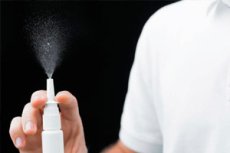
Researchers from Stanford Medicine and colleagues described an experimental nasal vaccine for mice that demonstrated an unusually broad spectrum of protection in the respiratory tract: from several coronaviruses (including SARS-CoV-2) to bacterial pathogens causing hospital-acquired pneumonia and even a house dust mite allergen. The key idea here is not "selecting the perfect antigen," but rather an attempt to long-term prime the lungs' local immune system so that it responds more quickly and powerfully to various threats.
The study was conducted on animals, but the concept itself is interesting because, if successful in humans, it could reduce the reliance of vaccines on constant updates to address new virus variants and seasonal outbreaks.
Background of the study
Classic vaccines are almost always built around antigen specificity: the immune system learns to recognize a specific "part" of the pathogen (for example, a protein on the surface of the virus). This is effective, but the approach has a weakness: when the antigen mutates, protection can decrease, and when a new pathogen emerges, a new vaccine is required.
In parallel, the phenomenon of "trained" innate immunity has long been discussed in immunology: innate cells can alter their reactivity after exposure to certain stimuli and, for a time, respond more strongly to subsequent threats, even if they are different microbes. This effect is typically less precise than adaptive memory, but potentially broader in scope.
A particular historical example that fuels interest in the idea of broad protection concerns the Bacillus Calmette-Guérin tuberculosis vaccine: various studies have described heterologous effects (impact on the incidence of other infections), although the results have not always been consistent and depend on the conditions and design of the studies.
In the study under discussion, the authors attempt to "sew" the advantages of two branches of immunity. In the adaptive branch (T cells and antibodies), long-term memory is important, but it is specific. In the innate branch, speed and breadth of threat recognition are important, but it is classically short-lived. The study's concept is to maintain local innate readiness in the lungs through signals supported by the adaptive response.
Why is this important?
Most serious seasonal and pandemic threats to the population are related to the respiratory tract. Viruses evolve rapidly, and bacterial resistance to antibiotics makes pneumonia and its complications more severe. An additional layer of protection, not tied to a single antigen, could theoretically reduce risks in several ways.
Moreover, local immunity of the mucous membranes (nasopharynx, bronchi) is often considered more relevant for preventing infection at entry than a purely systemic response. Therefore, "nasal delivery" itself is not just a matter of convenience, but part of a biological strategy.
Purpose of the study
To test whether a nasal "synthetic" vaccine that mimics immune signals from infection can provide long-lasting and broad protection in the lungs of mice against various types of threats: viral, bacterial, and allergic.
Materials and methods
The candidate formulation used was a composition designated GLA-3M-052-LS+OVA. Press releases emphasize that it combines stimuli for innate immunity (via pathogen recognition receptors, including toll-like receptors) and a "safe antigen" (ovalbumin, a model egg protein) to attract T cells to the lungs and maintain local innate cell activity for weeks and months.
Immunization was administered intranasally (by placing a drop of the drug in the nose). Various dosing regimens were used in the experiment; reports separately indicate that a regimen of three doses, spaced one week apart, provided protection against coronaviruses for at least three months. The animals were then challenged with the chosen pathogen or exposed to an allergen, and clinical signs (e.g., weight loss), survival, and lung damage were assessed.
Results and interpretation
A viral model has been used to report reduced disease severity in vaccinated mice: less weight loss, improved survival, and lungs that were nearly "cleared" of the virus compared to control animals. An important numerical detail from the study: a long-term sustained innate response reduced the viral load in the lungs by approximately 700-fold.
The authors interpret this as a "two-layer" of protection: first, the activated innate response sharply reduces viral replication, and then the adaptive branch is able to activate faster than usual. The report compares the timing: the typical adaptive response in the lungs can be initiated in approximately three days, compared to approximately two weeks in unvaccinated animals.
Following viral experiments, a similar principle was tested on bacterial respiratory infections (Staphylococcus aureus and Acinetobacter baumannii) and on house dust mite allergens: in both cases, protection was also described for approximately 3 months and a weakening of the pathological inflammatory response in the respiratory tract.
A quick summary of what was tested in mice
| Threat category | Examples from work | What was observed in vaccinated people? |
|---|---|---|
| Viruses | SARS-CoV-2 and other coronaviruses | Less severity, higher survival, lower viral load (~700-fold reduction reported) |
| Bacteria | Staphylococcus aureus, Acinetobacter baumannii | Protection against severe lung infection is on the horizon for about 3 months. |
| Allergens | House dust mite protein | Reduced allergic response and less mucus in the airways |
Discussion
The key word in this story isn't "universal," but rather a mechanistic attempt to sustain local innate readiness over the long term through carefully selected signals. Toll-like receptors (pattern-recognizing receptors of innate immunity) have long been considered targets for adjuvants because their activation enhances antigen presentation and the generation of T cell and antibody responses.
Of particular interest is that the GLA-3M-052-LS stimulus combination used is described in the scientific literature as a liposomal system combining synthetic ligands for TLR4 and TLR7/8, thereby simultaneously acting on multiple "danger sensors." This may explain the severity and breadth of the activation of innate programs in the mucous membranes.
Quotes from the discussion in the source
- Professor Bali Pulendran emphasizes that the idea "sounded a bit crazy" and was therefore particularly intriguing as a scientific risk.
- He describes the concept as a potential "universal vaccine against various respiratory threats" and uses the image of "a nasal spray in the fall that protects against COVID-19, flu, respiratory syncytial virus, colds, bacterial pneumonia, and even spring allergens."
Practical significance
If this approach is validated in humans, it could lead to a "platform" prophylaxis, where the formula targets not just one specific antigen but rather maintains an effective barrier in the lungs throughout the season. In theory, this would simplify the vaccination schedule and could serve as a backup in the event of the emergence of a new respiratory pathogen before a specific vaccine is developed.
A separate potential niche is the prevention of complications in vulnerable groups, where hospital-acquired bacteria and severe pneumonia are particularly dangerous. However, this is still just a hypothesis: data has been obtained in mice and specific infection models.
Restrictions
- This is preclinical work: results in mice do not guarantee the same effectiveness and safety in humans.
- The composition includes the model antigen ovalbumin; it is convenient for experiments, but is not a "universal antigen" for humans. For clinical use, a different, clinically justified antigen component or a different design would be required.
- The risks of increased inflammation and side effects with strong stimulation of the innate immune system always require separate and thorough testing, especially for intranasal administration. The announcement mentions plans to begin with a Phase 1 (safety) study.
Conclusions
In mice, the nasal formulation GLA-3M-052-LS+OVA provided broad and relatively long-lasting protection in the lungs against various threats: viruses, bacteria, and allergens. The effect is described as being related to the "maintained" innate readiness of the mucous membrane, fueled by an adaptive response. The next critical step is to demonstrate the safety and reproducibility of the effect in humans and understand the optimal dosing regimen and composition for clinical trials.
Original article in Science: Mucosal vaccination in mice provides protection from diverse respiratory threats. DOI: 10.1126/science.aea1260.