
New publications
Protein restriction may involve a single adaptation program that is associated with healthier aging.
Last updated: 15.09.2026

All iLive content is medically reviewed or fact checked to ensure as much factual accuracy as possible.
We have strict sourcing guidelines and only link to reputable media sites, academic research institutions and, whenever possible, medically peer reviewed studies. Note that the numbers in parentheses ([1], [2], etc.) are clickable links to these studies.
If you feel that any of our content is inaccurate, out-of-date, or otherwise questionable, please select it and press Ctrl + Enter.
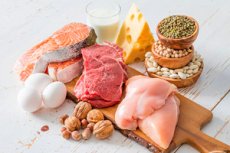
Moderate dietary protein restriction may influence lifespan not through a single "longevity gene" or metabolic pathway, but by triggering a holistic physiological program that integrates cellular amino acid recognition, liver function, hormonal signals, the brain, feeding behavior, and energy metabolism. This model was proposed by researchers from the Pennington Biomedical Research Center in a paper published in Cell Metabolism.
Authors Sora Kim, Sangho Yu, and Christopher Morrison point out a curious contradiction. Dietary protein restriction extends lifespan in several model organisms and simultaneously affects multiple processes considered key hallmarks of aging: nutrient sensing, mitochondrial function, cellular senescence, metabolism, and intercellular signaling. These effects are typically considered separately. The authors propose that they are parts of a single, evolutionarily shaped response to low protein availability.
Central to the proposed model is fibroblast growth factor 21, a hormone produced primarily by the liver in response to reduced protein and certain amino acid intake. It transmits information about nutritional status to other organs and the brain, altering energy expenditure, food preferences, and metabolism. In mouse studies, the absence of FGF21 virtually eliminated many of the beneficial effects of a low-protein diet, including increased lifespan.
However, the new article is not a clinical study and does not demonstrate that people should voluntarily reduce protein intake for longevity. It is a conceptual publication in the Forum category, consolidating the results of previous studies and proposing a new model for their interpretation. The authors emphasize the need to understand the boundary between beneficial adaptation to moderate protein reduction and true protein deficiency, which, especially in old age, can lead to muscle loss and decreased physical fitness.
| The main idea of the article | What does it mean? |
|---|---|
| Protein restriction acts systemically | Changes occur simultaneously in cells, liver, brain and other organs |
| The reaction is not limited to a single mechanism | Many aging processes change as part of a single adaptation |
| FGF21 plays an important role | The hormone informs the body of a protein deficiency. |
| The brain is involved in coordinating the response | Changes in appetite, food choices, and energy expenditure |
| Lifespan increases in animal models | The effect has been particularly well studied in mice. |
| There is no evidence yet for longevity in humans. | There are only data on some metabolic effects |
| Too much restriction is dangerous | Muscle loss, weakness and malnutrition may occur. |
The authors propose a different approach to the relationship between nutrition and aging.
Modern aging biology often describes age-related changes through a set of interconnected processes—the so-called hallmarks of aging. These include impaired nutrient recognition, loss of the ability to maintain protein quality, mitochondrial dysfunction, cellular senescence, changes in epigenetic regulation, chronic inflammation, and other processes. Researchers are attempting to target each of these mechanisms separately, hoping to slow down age-related changes.
Dietary protein restriction is of interest because it simultaneously affects several of these parameters. Animal studies show changes in cellular sensitivity to amino acids, mTORC1 activity, autophagy, mitochondrial function, glucose and lipid metabolism, the number of senescent cells, and certain inflammatory signals. Therefore, a single dietary stimulus can trigger changes in multiple processes that were previously considered independently.
Kim, Yu, and Morrison propose reversing this logic. Perhaps the body isn't specifically trying to "improve mitochondria," "reduce cellular aging," or "suppress mTORC1." It simply recognizes decreased protein availability and activates an evolutionarily shaped program for survival in the face of potential nutritional deficiency. Changes in individual signs of aging then become consequences of this more general program.
From an evolutionary perspective, such a response makes sense. If an animal temporarily receives fewer essential amino acids, it benefits from slowing down growth and new tissue synthesis, increasing the efficiency of resource utilization, changing food preferences, and actively seeking protein sources. At the same time, mechanisms for cellular repair and efficient nutrient utilization may be enhanced. The fact that such an adaptation sometimes extends lifespan in the laboratory may be a side effect of a program originally designed to survive periods of malnutrition.
This approach changes the question. Instead of searching for a single mechanism by which a low-protein diet prolongs life, it is necessary to understand how well the body is able to activate the entire complex of responses and which components of this program are truly necessary for increasing healthy lifespan. This is precisely what the authors identify as one of the main directions for future research.
| Traditional view | New model of authors |
|---|---|
| Each aging mechanism is considered separately. | The changes are united by a common physiological program |
| mTORC1, mitochondria, and cellular aging are distinct targets | They can all respond to the same food deficiency signal. |
| The focus is on the cell | Liver, hormones, brain and behavior are taken into account |
| One "longevity mechanism" is being sought | Longevity may be the result of the coordination of many systems |
| Diet has a direct effect on tissues | Some of the effects occur through hormonal and neural signals. |
Why is a decrease in protein perceived by the body as a special signal?
Protein differs from carbohydrates and fats in that the body requires a constant supply of certain amino acids to build its own proteins. Humans and other animals are unable to synthesize certain amino acids in sufficient quantities. Therefore, a decrease in their intake represents a distinct biological signal that cannot be fully compensated for by additional calories from fats or carbohydrates.
Cells have systems that determine the availability of amino acids. One of the most well-known is the mTORC1 complex. When nutrients are sufficient, it supports protein synthesis, cell growth, and anabolic processes. When amino acid availability decreases, the activity of this system decreases, and the cell switches more to the maintenance and recycling of its own components, including autophagy—a mechanism for removing damaged proteins and organelles.
However, the authors of the new article emphasize that cellular recognition is insufficient to explain systemic effects. If dietary protein levels are low, the body must coordinate the activity of several organs simultaneously: alter feeding behavior, redistribute energy resources, restructure metabolism in the liver and adipose tissue, and, if possible, force the animal to seek out higher-protein foods. This is why the hormonal and nervous systems are involved in the response.
Furthermore, the effect may depend not only on the total amount of protein but also on the amino acid composition of the diet. In experiments, restriction of individual essential amino acids, particularly methionine, isoleucine, and valine, reproduces some of the metabolic and age-related effects of general protein restriction. This means that the body may respond not to the conventional metric of "grams of protein," but to the availability of specific amino acids and their combinations.
Therefore, a low-protein diet cannot be viewed as a simple way to reduce calorie intake. In many experiments, animals on a lower-protein diet actually ate more food but remained leaner due to increased energy expenditure. In other words, energy balance management itself was altered.
| Reaction level | What changes when protein availability decreases |
|---|---|
| Amino acid sensors | Determine the decrease in availability of building materials |
| mTORC1 | The activity of anabolic processes decreases |
| Autophagy | The processing of damaged cellular components may be enhanced. |
| Liver | Increases FGF21 production |
| Brain | Eating behavior and energy expenditure change |
| Adipose tissue | Energy metabolism is being restructured |
| Behavior | The desire to obtain food containing protein increases |
FGF21 may be one of the central coordinators of this reaction.
One of the most compelling components of the model is FGF21. This hormone is particularly actively produced by the liver under certain dietary stresses, including low protein availability. In experiments, its concentration rapidly increases after switching to a low-protein diet, after which the signal spreads throughout the body, affecting, among other things, the central nervous system.
Morrison's group previously conducted a long-term experiment with normal mice and animals genetically lacking FGF21. The mice were fed a normal or low-protein diet from three months of age until natural death. In normal mice, protein restriction reduced fat accumulation, improved glucose control, reduced frailty associated with aging, maintained physical performance, and increased lifespan.
In mice lacking FGF21, the results were virtually the opposite. They failed to demonstrate normal metabolic adaptation to low protein diets, and in old age, they lost weight faster, became weaker, and lived shorter lives. In a statistical analysis, a low-protein diet reduced the relative risk of death by approximately half in normal animals, whereas no protective effect was observed in mice lacking FGF21. This became one of the main arguments supporting the idea that the hormone not only accompanies the reaction but is essential for many of its components.
Other studies have shown that FGF21-dependent effects are manifested in various tissues. For example, during aging, a low-protein diet reduced several signs of cellular aging in white and brown adipose tissue, whereas in animals lacking FGF21, these changes were significantly weakened or disappeared. Thus, the liver hormone can transform a local signal of amino acid deficiency into systemic restructuring of several organs.
It's important, however, not to turn FGF21 into yet another "longevity hormone." It acts within the context of a specific physiological state and interacts with the nervous system, energy metabolism, and other hormones. The new concept suggests that lifespan depends not on a single molecule, but on the well-coordinated functioning of the entire system.
| FGF21 in protein restriction | Observed effect |
|---|---|
| Produced primarily by the liver | Signals low protein availability |
| Affects the brain | Changes food intake and food preferences |
| Increases energy expenditure | May prevent fat accumulation |
| Associated with adipose tissue adaptation | Mitochondrial function and energy metabolism change |
| Required for many effects in mice | Without FGF21, the benefits of a low-protein diet are dramatically reduced. |
| Associated with the lifespan of animals | Necessary to increase lifespan in some experimental models |
The brain doesn't just receive a signal - it restructures eating behavior and energy expenditure.
Until recently, it was clear that FGF21 acts on the brain, but it remained unclear which neurons are responsible for the response to protein deficiency. In 2026, the same research group identified a small population of neurons in the nucleus of the solitary tract of the medulla oblongata that contain a beta-klotho coreceptor and are sensitive to FGF21.
When researchers selectively ablate these neurons in mice, the animals failed to adapt normally to a low-protein diet. The characteristic changes in food intake, food choice, and energy expenditure did not occur. Conversely, artificial activation of these neurons could reproduce part of the response to protein restriction even on a normal diet.
This result provides a physiological explanation for why, when protein intake is reduced, animals can paradoxically eat more but accumulate less fat. The brain simultaneously stimulates feeding behavior and increases energy expenditure. Furthermore, the motivation to seek out protein sources—a behavior that, in the natural environment, would help alleviate nutritional deficiencies—changes.
This is extremely important from the perspective of the new concept. If the effect were limited solely to a cellular reduction in mTORC1 activity, it would be difficult to explain the changes in food choice or behavior of the entire organism. The discovery of a specific "liver-FGF21-medulla" pathway demonstrates that the dietary signal is transformed into a coordinated physiological program.
However, it is still unknown which specific neural circuits are required to influence lifespan. Neurons in the nucleus of the solitary tract have been shown to regulate feeding behavior and energy expenditure in mice, but it remains to be determined whether their activity is sufficient to reproduce the long-term effects of protein restriction on aging.
| Signal sequence | Estimated role |
|---|---|
| Protein intake decreases | A food deficiency signal occurs |
| Liver increases FGF21 | The information is transferred to other authorities |
| FGF21 reaches the brain | Sensory neurons are activated |
| The nucleus of the solitary tract responds to FGF21 | Eating behavior changes |
| Interest in protein foods is increasing | The body is trying to make up for the deficiency |
| Energy consumption changes | Reduces the tendency to accumulate fat |
| Systemic adaptation is maintained for a long time | Potentially affects health and aging |
Protein restriction affects several signs of aging at once
One of the most obvious effects is a change in the nutrient recognition system. Reduced amino acid availability reduces the activity of some anabolic signaling pathways, including mTORC1, and alters the FGF21 hormonal axis. This is of interest from an aging perspective, as chronically elevated activity of growth and synthesis pathways is considered one of the causes of decreased cellular resilience with age.
The second area of research concerns mitochondria. Protein restriction alters energy metabolism and can stimulate the renewal of damaged mitochondria. Studies of adipose tissue and the heart have revealed changes in mitochondrial quality and energy metabolism. In certain experimental models, a low-protein diet activated the AMPK-ULK1 signaling pathway, which is associated with the removal of damaged mitochondria, while simultaneously suppressing excessive mTOR activity.
The third area is cellular senescence. Senescent cells cease dividing normally but continue to secrete numerous inflammatory and signaling molecules that can adversely affect surrounding tissue. In mouse models, protein restriction reduced several molecular hallmarks of this condition in adipose tissue, with a significant portion of this effect dependent on FGF21.
Finally, systemic metabolism is altered. In laboratory animals, low-protein diets often reduce fat mass, increase energy expenditure, and improve glucose tolerance, despite the absence of calorie restriction and sometimes even an increase in total food intake. These changes can, in themselves, reduce the metabolic burden associated with age and obesity.
The authors emphasize that all of the above do not necessarily represent several independent causes of longevity. Mitochondria, cellular aging, glucose metabolism, autophagy, and hormonal changes may be interconnected manifestations of a single physiological adaptation. This idea distinguishes the new study from a typical review of the beneficial effects of a low-protein diet.
| A sign of aging | What can happen when you restrict protein? |
|---|---|
| Impaired nutrient recognition | mTORC1, FGF21, and other signals are rewired |
| Mitochondrial dysfunction | Mitochondrial renewal may be enhanced |
| Loss of protein quality control | Cellular processing processes are activated |
| Cellular aging | In some tissues, the corresponding markers are reduced |
| Metabolic disorders | Improved body weight and glucose control in animals |
| Intercellular communication | Hormonal and inflammatory signaling changes |
| Energy balance | Energy consumption may increase |
Life extension has been shown in animals, but the effect sizes are highly dependent on conditions
The relationship between protein intake and lifespan has been studied for nearly a century. Experiments have been conducted on fish, rodents, flies, yeast, and other organisms. In a number of models, reducing protein intake or individual amino acids has indeed increased lifespan, sometimes without an overall reduction in caloric intake. This cross-species reproducibility of this effect has sparked renewed interest in protein restriction as a strategy separate from calorie restriction.
However, the magnitude of the effect is far from universal. It is influenced by the animals' sex, genetic lineage, age at intervention, initial diet composition, the amount of specific amino acids, and energy content. For example, some metabolic reactions are more pronounced in male mice than in females. The authors therefore caution against the notion that there is a single protein percentage that is optimal for all organisms.
The experiment with FGF21 is particularly revealing: in normal male mice, a low-protein diet increased lifespan, while in animals lacking this hormone, the same diet, conversely, became detrimental. This demonstrates a fundamentally important feature of the new model: the same diet can only be beneficial if the body is able to respond adequately to it.
Thus, the potential effect is determined not only by what's on your plate, but also by the body's response. Age, gender, genetics, metabolism, physical activity, and likely the initial state of muscle tissue can determine whether a decrease in protein intake will be perceived as a moderate beneficial signal or a harmful deficiency. This is why the authors suggest searching for biomarkers of the adaptive response itself, rather than focusing solely on the amount of protein consumed.
In the future, such indicators could include changes in FGF21 concentrations, energy expenditure, food preferences, or cravings for protein foods. The authors suggest that the intensity of these responses may indicate how fully the physiological program has been activated. However, to date, none of these indicators have been validated as a clinical test of the "effectiveness" of a low-protein diet.
| Factor | Why is it important? |
|---|---|
| Type of organism | The reactions of yeast, flies, mice and humans differ |
| Floor | Significant sex differences have been found in animals |
| Genetics | May determine the ability to enable an adaptive program |
| Age | Young and old bodies have different needs. |
| Amino acid composition | Restricting different amino acids produces different effects |
| FGF21 | Necessary for many effects in mouse models |
| Initial nutrition | The result depends on the diet being compared to |
Some elements of the same reaction have already been discovered in humans.
Although there is no evidence for human life extension, a physiological response to protein restriction does exist in humans. Early controlled studies have shown that a low-protein diet can significantly increase circulating FGF21. In one experiment, its concentration increased by approximately 171% compared to baseline, confirming the presence of a protein deficiency recognition system similar to that found in rodents.
In 2025, researchers conducted a series of controlled experiments in young, healthy men. A low-protein diet, which still met the minimum protein requirement, increased FGF21 levels. To maintain body weight, the participants needed to increase their caloric intake, indicating increased energy expenditure. After returning to their usual higher protein intake, energy requirements returned to baseline.
More recent data from 2026 showed a similar result in overweight or obese men. Seventeen participants received either approximately 0.9 grams of protein per kilogram of body weight per day or approximately 1.8 grams of protein per kilogram of body weight per day for five weeks, with the same calorie intake. In the lower protein group, body weight decreased by an average of 2.0 ± 0.6 kilograms, and FGF21 levels increased.
However, these studies lasted a few weeks, not decades. They demonstrate that at least part of the proposed "protein-FGF21-energy metabolism" system is functional in humans, but they do not prove a slowing of biological aging, much less an increase in lifespan. The differences between the short-term metabolic effect and the actual impact on longevity are enormous.
For now, the most reasonable conclusion is that the fundamental mechanism of dietary adaptation is likely partially preserved in humans. The next question is whether it can be activated moderately enough to achieve metabolic benefits without causing muscle loss, weakness, or essential amino acid deficiencies. This is precisely what modern research has not yet established.
| What is shown in humans | What hasn't been shown yet |
|---|---|
| Decreased protein may increase FGF21 | That FGF21 extends human life |
| Energy consumption may increase | That the effect lasts for years |
| Changes in body weight are possible | What does it do to slow down biological aging? |
| The reaction occurs without reducing calories | That a low-protein diet is safe for all ages |
| The mechanism is partly reminiscent of the reaction in mice | That the results on mouse lifespan are transferable to humans |
The study does not mean that older people need to eat less protein.
This is where one of the main paradoxes of modern nutrition science arises. On the one hand, animal experiments indicate potential benefits of protein restriction for metabolism and longevity. On the other hand, with age, people lose muscle mass and respond less well to dietary protein, making adequate protein intake crucial for preventing sarcopenia, falls, weakness, and loss of independence. The authors of a previous review by the same group explicitly identify the conflict between longevity and physical fitness as one of the central unresolved issues.
Epidemiological data do indeed show that higher protein intake may be associated with better outcomes in the elderly. For example, in a Japanese cohort of independently living individuals aged 85 and older, higher protein intake was associated with lower overall mortality. This is an observational study and does not prove causality, but it clearly illustrates why results from experiments on young or middle-aged mice cannot be automatically translated into dietary recommendations for the elderly.
Some modern data on functional aging reveal a similar picture. In a study of older adults, higher protein intake was associated with a lower incidence of mobility limitations, frailty, falls, and decreased gait speed. Maintaining muscle and physical activity are crucial for healthy longevity.
Therefore, "protein restriction" in laboratory studies should not be confused with protein deficiency. In human experiments where interesting metabolic effects were observed, researchers carefully controlled the diet and maintained protein intake at a level that met the minimum physiological requirement. A severe reduction in protein intake on your own, especially in older adults, those with chronic diseases, post-surgery, or those with low body weight, may lead to effects completely different from those observed in experimental gerontology.
It's this new concept that helps explain this contradiction. The benefit may arise not from the fact of "eating less protein" per se, but from a moderate nutritional signal to which the body is capable of responding with a fully adaptive program. If the restriction becomes too severe or the adaptation is disrupted, the same signal transforms from a potentially beneficial stress into a simple nutritional deficiency.
| Situation | Possible significance of protein |
|---|---|
| Young laboratory animals | Moderate restriction often improves metabolism |
| Animals with a complete FGF21 response | Possible effect on life expectancy |
| Animals without FGF21 | Low protein can become harmful |
| Healthy young people | FGF21 and energy expenditure are temporarily increased |
| Elderly people | Maintaining muscle mass is of particular importance |
| Sarcopenia or frailty | Reducing protein is potentially especially risky |
| Severe protein deficiency | Not a healthy aging strategy |
Perhaps it's not the total amount of protein that's more important, but the specific amino acids
Another important idea is that not all proteins are physiologically equivalent. Protein is a mixture of amino acids, and each can interact differently with cellular sensors and metabolic pathways. Therefore, two diets with the same total protein intake could theoretically have different effects on aging.
Researchers are paying particular attention to methionine, isoleucine, and valine. Restricting these essential amino acids in animal models can mimic some of the effects of general protein restriction, including changes in energy metabolism and sensitivity to nutrient signals. This opens the possibility of adjusting the amino acid composition of diets in the future without reducing overall protein intake so significantly as to increase the risk of muscle loss.
This approach could potentially help resolve the conflict between preserving muscle mass and suppressing some anabolic signals associated with aging. Instead of a universal low-protein diet, one could imagine a diet containing sufficient total protein but a different amino acid ratio. However, this concept is still primarily experimental.
The origin of the protein creates additional complexity. Plant and animal foods differ not only in their amino acid composition, but also in their fiber, fat, mineral, and numerous other component contents. Therefore, associations between protein source and health cannot be automatically explained by the effects of a single amino acid. Controlled studies with precisely defined dietary compositions are needed to test such mechanisms.
This is why the authors of the new study effectively shift the focus from the simple question of "how much protein should you eat" to a more complex one: which dietary signals trigger beneficial adaptations, at what age, in which individuals, and with what amino acid composition of the diet. The answer remains unclear.
| Power supply component | Possible meaning |
|---|---|
| Total protein | Determines the overall level of amino acid availability |
| Methionine | The restriction affects the metabolism and lifespan of animals |
| Isoleucine | It is considered as one of the key regulators of metabolic response. |
| Valin | May also be involved in the effects of amino acid restriction |
| Leucine | Actively interacts with the mTORC1 system |
| Source of protein | Determines not only amino acids, but also other components of the diet |
| Amino acid ratio | May be more important than just one total protein indicator |
The main unresolved question is where exactly the longevity effect occurs.
The new article essentially poses the following challenge for researchers: to determine which component of the overall adaptive program is truly essential for life extension. FGF21 may be key. It's also possible that a decrease in mTORC1, changes in mitochondria, cellular aging, or inflammation could be involved. But it's possible that no single element alone can provide the full effect.
This has significant implications for the development of future treatments. If activating one specific pathway is sufficient, it may be possible to replicate the benefits of a restricted diet medicinally. However, if longevity only occurs with the coordinated functioning of the liver, brain, adipose tissue, muscle, and cellular sensors, then pharmacologically mimicking a low-protein diet will be significantly more difficult.
It's also necessary to understand how this response changes with age. A young body can temporarily reduce growth processes and redirect resources to tissue maintenance. In old age, people experience muscle loss, decreased appetite, and reduced metabolic flexibility. Therefore, the optimal nutritional signal, if it exists at all, will likely differ at different stages of life.
Another avenue is the search for biomarkers. The authors suggest that FGF21 concentrations, changes in energy expenditure, or increased desire for protein-rich foods may reflect the degree to which the overall adaptation program is activated. If this is confirmed, it will be possible in the future to assess not only the composition of the diet but also the actual physiological response of a given individual to it.
Finally, long-term controlled studies in humans are needed. Short-term experiments already confirm increases in FGF21 and changes in energy metabolism, but determining the impact of diet on healthy lifespan is significantly more difficult. Until such data emerges, low-protein diets cannot be considered a proven method for slowing human aging.
| Next question | Why is it important? |
|---|---|
| What component of adaptation is necessary for longevity? | Will help identify the main therapeutic target |
| Can the effect be replicated without protein restriction? | This may lead to medicinal approaches |
| How does age affect? | Protein requirements change throughout life. |
| How does gender influence? | The reaction varies significantly among animals. |
| Is it possible to measure the effectiveness of adaptation? | Individual biomarkers are needed |
| Which amino acids are most important? | More precise dietary strategies may be possible |
| Does the mechanism work for decades in people? | This is the main gap in the evidence so far. |
What does the new concept ultimately change?
The main conclusion of the publication is not that protein "accelerates aging," but rather that its restriction automatically prolongs life. The authors propose a more complex model: a moderate reduction in protein availability represents an information signal that the body recognizes and responds to with extensive adaptation. This reaction begins at the level of cellular amino acid recognition, continues through hepatic FGF21 and the nervous system, and culminates in changes in metabolism, feeding behavior, and tissue health.
This model explains well why protein restriction simultaneously affects a large number of aging-related processes. Instead of several independent "rejuvenating" effects, there may be a single, ancient physiological program that causes the body to temporarily reallocate resources from growth to adaptation, tissue maintenance, and the search for essential nutrients.
The strongest evidence so far comes from laboratory animals. In humans, an increase in FGF21 and some changes in energy metabolism with controlled protein restriction have already been confirmed, but there is no evidence that this strategy prolongs life. Moreover, in old age, protein deficiency can have the opposite effect due to the loss of muscle mass and physical fitness.
Therefore, the practical significance of this work currently lies primarily in changing the research model. Instead of searching for a universal "longevity diet," the scientists propose studying the body's ability to respond appropriately to dietary composition. Perhaps the quality of this adaptation, rather than the simple amount of protein consumed, will ultimately prove to be one of the factors determining healthy aging.
| What can be concluded now? | What cannot be concluded |
|---|---|
| Protein restriction extends lifespan in a number of animal models | That it has been proven to prolong human life |
| FGF21 plays a central role in mice | That increasing FGF21 is a therapy in itself |
| The brain is involved in coordinating the reaction | That it can be safely reproduced with one pill |
| Many signs of aging change | That all these changes are equally important |
| In humans, FGF21 also increases | That a long-term low-protein diet is safe |
| The reaction depends on age, gender and genetics | That there is a universal protein intake for longevity |
News source
Kim SQ, Yu S, Morrison CD. Protein restriction and the hallmarks of aging: A coordinated physiological adaptive response? Cell Metabolism. 2026;38(9):1751–1753. Published online August 17, 2026. This publication is a conceptual Forum article and not a new randomized clinical trial. DOI: 10.1016/j.cmet.2026.08.005.
The core experimental data underlying the proposed model include studies of FGF21 and lifespan in mice, neural mechanisms of the response to protein restriction, and controlled studies of metabolic responses in humans. Therefore, the new publication is more accurately viewed as an attempt to integrate previously accumulated data into a unified physiological theory, rather than as proof that protein restriction is a ready-made method for extending human life.