
New publications
Private gardens and several parks near the home have been linked to a lower risk of type 2 diabetes.
Last updated: 09.08.2026

All iLive content is medically reviewed or fact checked to ensure as much factual accuracy as possible.
We have strict sourcing guidelines and only link to reputable media sites, academic research institutions and, whenever possible, medically peer reviewed studies. Note that the numbers in parentheses ([1], [2], etc.) are clickable links to these studies.
If you feel that any of our content is inaccurate, out-of-date, or otherwise questionable, please select it and press Ctrl + Enter.
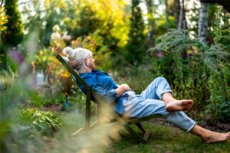
Living in an area with a high proportion of private gardens may be associated with a slightly lower risk of developing type 2 diabetes. This conclusion was reached by researchers who analyzed data from over 423,000 participants in the UK Biobank. The study was followed for an average of about fifteen years.
People living in neighborhoods with the highest proportion of private gardens had a relative risk of diagnosed diabetes that was approximately 7 percent lower than those living in neighborhoods with the lowest proportion. After accounting for age, gender, education, socioeconomic status, smoking, alcohol consumption, dietary habits, and family history of diabetes, the odds ratio was 0.932.
The number of accessible parks also mattered. Having more than three parks within 800 meters of home was associated with a relative risk reduction of approximately 6 percent. However, the simple distance to the nearest park—either as the crow flies or along an actual walking route—was not associated with the incidence of new diabetes cases.
The results do not prove that a garden or park directly prevents diabetes. The study was observational: people were not randomly assigned to neighborhoods or asked to use green spaces. Therefore, the observed association may be partially explained by physical activity, income, housing quality, air pollution, diet, and other factors that cannot be fully controlled for statistically.
Why green spaces may be linked to metabolism
Type 2 diabetes develops from a combination of insulin resistance, insufficient insulin secretion, and prolonged elevated blood glucose levels. Among the most important modifiable risk factors are excess body weight, low physical activity, prolonged sitting, and an unfavorable diet.
Green spaces can create conditions for a more active lifestyle. Having a garden right next to your home allows you to get outside more often, engage in moderate physical activity, and spend less time sitting. Parks and greenways can encourage walking, exercise, and social interaction.
A private garden can differ from the typical greenery seen in satellite images. It is accessible to owners or residents almost constantly and can be used for growing vegetables and fruits, socializing, relaxing, playing with children, and interacting with pets. The authors suggest that these characteristics can simultaneously influence physical activity, nutritional quality, and psychological well-being.
Vegetation may also partially reduce the effects of heat, noise, and certain air pollutants. Furthermore, contact with nature has been linked to reduced psychological stress and increased exposure to a greater diversity of environmental microorganisms. However, the new study did not directly measure any of these mechanisms, so they remain potential explanations rather than proven causal pathways.
| Possible route of exposure | How green spaces could theoretically influence diabetes risk |
|---|---|
| Physical activity | Walking, gardening, playing and other types of movement increase energy expenditure. |
| Reducing sedentary time | Accessible space near the house makes it easier to take short trips outside regularly. |
| Nutrition | Growing vegetables, fruits, and herbs can contribute to a more varied diet. |
| Psychological state | Contact with nature can reduce chronic stress. |
| Social contacts | Parks and gardens can support social interaction and shared activity |
| Environmental quality | Vegetation can partially reduce heat, noise and air pollution. |
| Microbial diversity | Contact with soil and plants may alter exposure to environmental microorganisms |
These mechanisms were discussed by the authors as possible explanations for the associations but were not tested directly.
How the study was organized
The authors conducted a prospective cohort study based on the UK Biobank, a large project that recruited adults from England, Scotland, and Wales between 2006 and 2010. Participants were aged 37 to 73 years at baseline. They completed questionnaires, underwent interviews, underwent medical measurements, and provided biological samples.
People diagnosed with diabetes before the start of the study, self-reported diabetes, hospitalization records, or taking antidiabetic medications were excluded from the analysis. After these exclusions and removal of records with missing data, the final sample included 423,282 people.
The average age of the participants was 56.36 years. Women constituted 55.36 percent of the sample, white participants 95.09 percent, and residents of urban areas 89.23 percent. This sample structure is important for interpretation: the results best describe a predominantly white, middle-aged and older British population.
The median follow-up period was 15.41 years, and the total follow-up volume exceeded 6.85 million person-years. During this time, 19,648 participants were diagnosed with type 2 diabetes, recorded in hospital care data.
The researchers used Cox proportional hazards models. The calculations took into account age, gender, education, ethnicity, urban or other neighborhood type, deprivation index, smoking, alcohol consumption frequency, dietary intake, and diabetes in parents and siblings.
| Characteristic | Research data |
|---|---|
| Type of work | Prospective cohort study |
| Data source | UK Biobank |
| Number of participants | 423 282 |
| Middle age | 56.36 years |
| The proportion of women | 55.36% |
| Percentage of white participants | 95.09% |
| The share of residents of urban areas | 89.23% |
| Median observation | 15.41 years |
| Summary observation | 6,855,847 person-years |
| New cases of type 2 diabetes | 19,648 |
| End date of observation | July 31, 2024 |
How gardens and park accessibility were measured
The proportion of green space was calculated using high-precision geographic data from the British mapping service Ordnance Survey. Unlike satellite indices, which show the overall "greenness" of an area, this dataset differentiated functional types of space, including private residential gardens.
The total area of green spaces and private gardens was measured within a 100-meter radius of each participant's home. The private garden indicator represented the percentage of the immediate area classified as private residential gardens.
Access to public parks was assessed using three methods. The researchers calculated the direct, or Euclidean, distance to the nearest entry point, the distance along the actual pedestrian network, and the number of parks fully or partially within an 800-meter radius of one's home. This radius is approximately equivalent to a ten- to fifteen-minute walk.
When calculating the route, streets, paths, trails, and physical barriers were taken into account. Each park could have multiple entrances, so the researchers calculated the route to the nearest actual access point, rather than to the imaginary center of the green space. This allowed them to more accurately describe the feasibility of walking to the park.
| Indicator | How it was calculated |
|---|---|
| Common green area | Percentage of green space within a 100m radius of the home |
| Private residential gardens | Percentage of private garden area within a 100m radius |
| Distance in a straight line | The shortest route from home to the nearest park entrance |
| Walking distance | The shortest accessible route through streets, paths and trails |
| Number of parks | Number of parks located wholly or partially within 800 m |
| Size of the nearest park | Analyzed separately to check the robustness of the results |
| Participant's address | Coordinates have been rounded to the nearest 100 m to maintain confidentiality. |
A higher proportion of private kindergartens was associated with a lower risk of diabetes
Participants were divided into four groups based on the proportion of private gardens around their homes. In a fully adjusted model, individuals in the top quartile of the distribution had a lower risk of registered diabetes than those in the bottom quartile: the odds ratio was 0.932, with a 95% confidence interval of 0.885 to 0.983.
This figure corresponds to an approximate relative risk reduction of 6.8 percent. The confidence interval did not cross unity, so the result was statistically significant. However, this refers to the relative risk over the observation period, not to the fact that the probability of developing the disease for each resident of the area with gardens is reduced by exactly seven percentage points.
The relationship was nonlinear. No consistent reduction in risk was observed for small and moderate amounts of greenery. For private gardens, the curve began to lean toward potential benefit after reaching approximately 27 percent of the area, and a significant statistically significant reduction emerged when gardens accounted for more than approximately 53 percent of the immediate area. These values were determined visually from the statistical curve and should not be considered as medical standards.
The overall proportion of all types of green spaces revealed a more complex result. In the second and third quadrants of the distribution, the risk was slightly higher than in the first, and for the greenest quadrant, no statistically significant advantage was found. This suggests that the specific type of green space may be more important than the total amount of vegetation around the home.
For overall greenery and gardens, the authors found an inverse U-shaped relationship, rather than a simple "greener is better" rule. This shape may reflect genuine differences between neighborhood types, but it could also be the result of residual confounding, development characteristics, or statistical instability at extreme exposure levels.
| Comparison | Risk ratio | 95% confidence interval | Interpretation |
|---|---|---|---|
| Upper versus lower quadrants of private gardens | 0.932 | 0.885-0.983 | Approximately 6.8% lower relative risk |
| Second versus first quarter of total greenery | 1,082 | 1,034-1,133 | Slightly increased risk |
| Third versus first quarter of total greenery | 1,098 | 1,048-1,152 | Slightly increased risk |
| Top versus bottom quarter of total greenery | 0.978 | 0.930-1.028 | There is no statistically significant difference |
| More than three parks versus one or none | 0.943 | 0.906-0.981 | Approximately 5.7% lower relative risk |
A risk ratio below one corresponds to a lower relative risk, but does not prove a causal effect of green space.
The number of parks turned out to be important, not the distance to the nearest one.
Living within 800 meters of the nearest park was not associated with a lower incidence of diabetes compared to living between 800 and 1,500 meters away. This lack of association persisted regardless of whether the researchers calculated the distance as a straight line or along the accessible pedestrian network.
No increased risk was found in people living more than 1,500 meters from the nearest park. The size of the nearest green space was also not associated with disease incidence in an additional analysis. Therefore, the presence of one large or nearby park alone was not a sufficient statistical indicator.
A different picture was observed when counting all parks around their home. Participants with more than three parks within 800 meters had slightly lower rates of diabetes than those with one park or none near their home. The odds ratio was 0.943, corresponding to a relative reduction of approximately 5.7 percent.
The authors suggest that multiple parks may offer more route options, activities, and access points. Furthermore, the number of parks may better reflect the overall structure of a walkable neighborhood than the distance to the single nearest green space. However, the researchers did not measure actual park use.
| Park Access Index | Link to type 2 diabetes |
|---|---|
| The park is no further than 800 m in a straight line | No statistically significant relationship was found. |
| The park is no further than 800 m along the pedestrian network | No statistically significant relationship was found. |
| The nearest park is further than 1500 m | No statistically significant relationship was found. |
| Size of the nearest park | No statistically significant relationship was found. |
| Two or three parks within 800 m | No convincing risk reduction has been demonstrated. |
| More than three parks within 800 m | The risk was lower: odds ratio 0.943 |
The route along the streets turned out to be noticeably longer than the straight line distance.
Straight-line distance and actual walking distance were closely related: the correlation coefficient was 0.94. However, this did not mean the two indicators were interchangeable. On average, the walking route was 216 meters longer than the straight-line distance to the park.
After logarithmically transforming the data, the researchers found that the actual path was, on average, approximately 43 percent longer than the Euclidean distance. The discrepancy became especially noticeable as the total distance increased.
Fences, rivers, railway lines, dead ends, and limited entrances can be the cause. A house may be located near the park boundary, but the actual entrance is on the opposite side. In such a situation, a satellite map creates the impression of easy accessibility, even though one has to walk considerably further.
Despite the more precise measurement, walking distance did not predict diabetes risk. This negative result is important: it demonstrates that the geographical proximity of a green space does not necessarily equate to its use or benefit. Safety, path condition, lighting, equipment, and park attractiveness can be more important than a few hundred meters of difference.
| Comparison of distances | Result |
|---|---|
| Correlation of direct and walking distance | 0.94 |
| Average additional walking distance | 216.24 m |
| Average relative difference after transformation | About 43% |
| Association of direct distance with diabetes risk | Not detected |
| Association of walking distance with diabetes risk | Not detected |
The connection was stronger in socially disadvantaged areas
The positive association with private gardens was more pronounced among people living in areas with a high socioeconomic deprivation index. The authors believe that accessible green space directly adjacent to the home may be particularly important in areas where residents have fewer alternative opportunities for recreation and physical activity.
A private or public garden can provide an inexpensive form of moderate exercise for people who are less likely to attend sports facilities. Gardening does not require sophisticated equipment and can combine physical activity with growing food, social contact, and psychological recovery. These potential explanations were not directly tested in the study.
A stronger association was also observed among participants without diabetes in their immediate family. Among those with a family history of the disease, the statistical advantage of private daycare centers was less significant. The authors suggest that with a high hereditary or familial predisposition, the relative contribution of the environment may be weaker.
This doesn't mean that green spaces are useless for people with a family history of diabetes. Subgroup analyses are less reliable than the main outcome, and family history includes both genetic and general lifestyle and dietary factors. For people with a hereditary predisposition, monitoring body weight, diet, physical activity, and laboratory parameters remains particularly important.
| Subgroup | Observation |
|---|---|
| Residents of more deprived areas | The association of private gardens with lower risk was stronger |
| Residents of less deprived areas | The advantage was less pronounced |
| Participants without a family history of diabetes | A more pronounced defensive association was observed in the upper category of gardens |
| Participants with a family history | No convincing advantage was found |
| Age and gender | No significant changes were found in most relationships. |
| Number of parks | No significant differences were found between the subgroups studied. |
Why the results cannot be considered proof of a preventive effect
The study was observational. People either chose their neighborhood or were drawn to it based on income, employment, family circumstances, and a variety of other factors. Residents of greener neighborhoods may differ in the quality of healthcare, housing characteristics, pollution levels, occupation, sleep patterns, and exercise opportunities.
Although the authors accounted for a number of social and behavioral factors, it was impossible to completely remove residual confounding. For example, the dietary indicator consisted of a limited set of characteristics and did not capture the entire diet. The model also lacked objective, longitudinal measures of physical activity, actual time spent in the garden, and park visits.
The result for private gardens depended on the chosen radius. A significant association was observed when assessing an area within 100 meters, but this was not maintained when using alternative buffers of 300, 500, and 1000 meters. This reduces confidence that the effect is robust across different geographic measurement methods.
House coordinates were rounded to the nearest 100 meters to preserve confidentiality. This could lead to a participant living 750 meters from a park being incorrectly classified as living more than 800 meters away, and vice versa. Furthermore, data on green spaces was collected after the original Biobank surveys, although the authors note the relative stability of British green spaces.
Diabetes cases were identified from hospital records. This could have missed people diagnosed and treated exclusively in primary care. Finally, the researchers only knew the address at enrollment and were unable to fully track relocations over the fifteen-year period.
| Limitation | Possible influence on the result |
|---|---|
| Observational design | It cannot be proven that gardens or parks have reduced the risk |
| Residual mixing | The association may be partly explained by income, housing and lifestyle. |
| No data on garden use | It is unknown whether the participants spent time in the green area. |
| There is no data on the quality and safety of parks | The nearby park may have been inconvenient or unattractive. |
| Coordinates are rounded to 100 m. | Possible misclassification of distances |
| The exposure was assessed at the original address | Subsequent moves are not fully taken into account |
| Diagnoses from hospital records | Some cases treated only on an outpatient basis may have been missed |
| Dependence on buffer size | The result for gardens was not confirmed at all geographical scales. |
| Predominantly white sample | The transferability of the results to other populations is limited |
What the study means for urban planning
The study shows that when assessing the impact of urban nature, measuring only the overall vegetation cover or the distance to the nearest park is insufficient. The functional type of green space and the diversity of accessible spaces may be more informative indicators.
Private gardens are not accessible to everyone and are closely linked to housing type. Therefore, the authors propose considering not only the preservation of gardens in residential developments but also the creation of public gardens and several small parks within walking distance. Such areas could potentially compensate for the lack of private gardens for residents of high-rise and socially disadvantaged areas.
However, the study cannot calculate how many cases of diabetes the construction of the new park will prevent. This would require natural experiments assessing residents' health before and after changes to the urban environment, as well as studies of actual land use, physical activity, and metabolic indicators.
At the individual level, these results do not mean that moving to a house with a garden replaces diabetes prevention. Weight management, regular physical activity, proper nutrition, smoking cessation, and regular glucose testing remain key measures. A garden or accessible park can be an environment that facilitates healthy habits, but it is not a standalone therapeutic intervention.
| The study showed | The study did not prove |
|---|---|
| Higher proportion of private kindergartens linked to lower risk of diabetes | That having a garden directly prevents disease |
| More than three parks near home are associated with lower risk | That the construction of any park will automatically improve health |
| Distance to the nearest park did not predict risk | That park accessibility doesn't matter at all |
| A pedestrian's path is often much longer than a straight line. | That a more accurate distance necessarily better predicts health |
| The connection was stronger in deprived areas | That gardens completely eliminate social inequality |
| The results were maintained in several additional analyses. | That all alternative explanations are excluded |
| Urban environments can support healthy behaviors | That it replaces nutrition, physical activity and medical supervision |
Results of the study
Over 15.41 years of follow-up, 19,648 new cases of type 2 diabetes were recorded among 423,282 participants in the UK Biobank. People living in areas with the highest proportion of private residential gardens had a relative risk of developing the disease that was approximately 7 percent lower than those living in areas with the lowest proportion of gardens.
Having more than three parks within 800 meters of home was associated with a relative risk reduction of approximately 6 percent. However, neither the distance to the nearest park nor the size of the park demonstrated a significant association with disease incidence.
The results support the idea that access to multiple functional green spaces may be more important than the formal proximity of a single park. However, due to the observational design, it is the association that should be considered, rather than a proven protective effect.
The most promising area will be research into areas where new gardens, parks, and pedestrian routes are being created. This will help determine whether changes in the urban environment actually lead to increased physical activity, improved body weight, and a reduction in new cases of diabetes.
News source
Odebeatu CC, Darssan D, Roscoe C, Reid S, Osborne NJ. Private garden exposure and public park access in relation to type-2 diabetes incidence: a UK Biobank cohort study. BMC Public Health. 2026;26:2284. Article published 2 July 2026; scientific record version dated 5 August 2026.
DOI: 10.1186/s12889-026-28277-1
This work received no specific funding from government, commercial, or non-profit organizations. The first author conducted the research as part of his doctoral training and received a fellowship from the University of Queensland's Research Training Program. One of the co-authors, Charlotte Roscoe, is the editor of the Greenspace, Biodiversity, and Health topic collection in the journal BMC Public Health; the authors declared no other competing interests.