
New publications
Microplastics are more than just pollutants: they can carry toxic substances, pathogens, and antibiotic resistance genes.
Last updated: 05.09.2026

All iLive content is medically reviewed or fact checked to ensure as much factual accuracy as possible.
We have strict sourcing guidelines and only link to reputable media sites, academic research institutions and, whenever possible, medically peer reviewed studies. Note that the numbers in parentheses ([1], [2], etc.) are clickable links to these studies.
If you feel that any of our content is inaccurate, out-of-date, or otherwise questionable, please select it and press Ctrl + Enter.
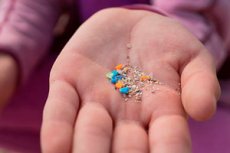
Microplastics in the environment may pose a far more complex threat than previously thought when assessed as a standalone pollutant. Plastic particles can act as "transport platforms," accumulating heavy metals, persistent organic pollutants, and other chemicals on their surfaces while simultaneously creating a breeding ground for bacteria, pathogens, and antibiotic resistance genes. This is the conclusion reached by the authors of a new scientific review published on August 28, 2026, in the journal Energy & Environment Nexus.
Researchers from Jiangxi Agricultural University analyzed extensive literature on the behavior of micro- and nanoplastics in water, soil, bottom sediments, and organisms. The review's key conclusion is that plastic cannot be viewed solely as an isolated particle that mechanically impacts living organisms. In the real environment, it gradually transforms into a complex mixture of polymer, adsorbed chemicals, organic material, and microorganisms.
The authors paid special attention to the so-called Trojan horse effect. A pollutant can first attach to microplastics, travel with them over long distances, enter an animal's body, and then be released in the digestive tract. However, nanoplastics smaller than one micrometer in size potentially act differently: such particles can overcome biological barriers and transport their associated chemical payload deeper into tissue.
But perhaps the most alarming aspect of the review was the biological aspect of the problem. Biofilms—unique microbial ecosystems known as "plastispheres"—form on the surface of plastic. They can concentrate opportunistic and pathogenic microorganisms and create conditions for the exchange of antibiotic resistance genes. The authors believe that chemical and biological mechanisms can reinforce each other, creating a positive feedback loop and turning aging microplastics into particularly active carriers of combined pollution.
| Highlights from the new review | What the analysis showed |
|---|---|
| Publication type | a scientific review, not a new experiment |
| Microplastics | can carry chemical and biological contaminants |
| Chemical cargo | heavy metals, persistent organic compounds, pesticides, antibiotics, etc. |
| Biological cargo | bacteria, pathogens, antibiotic resistance genes |
| Key mechanism | Trojan horse effect |
| Biofilm on plastic | plastisphere |
| Special risk | interaction of chemical pollution and microbial biofilms |
| DOI | 10.48130/een-0026-0017 |
Microplastics are transforming from trash into a "transport system" for pollutants.
The authors define microplastics as particles ranging in size from approximately 1 micrometer to 5 millimeters, while nanoplastics are particles smaller than 1 micrometer. Most of these particles are formed during the gradual degradation of plastic products due to solar radiation, mechanical abrasion, temperature, and other environmental factors. According to the authors, global plastic production reached approximately 430 million tons in 2024 and, under current trends, could exceed 1.2 billion tons by 2060.
The problem lies in the extreme persistence of plastic particles and their ability to migrate between different environments. Microplastics are found in seawater, freshwater, soil, sediment, the atmosphere, and food chains. The authors cite research findings that also found plastic in human blood, placenta, and other biological samples. However, these findings demonstrate exposure and particle distribution, but do not in themselves prove that the detected plastic causes a specific disease in humans.
From an environmental perspective, the most important feature is the particle's surface. The polymer can remain in contact with contaminated water or soil for months or years. During this time, chemicals settle on it and a biofilm forms. Therefore, an old microplastic particle often differs significantly from a freshly produced plastic pellet: its surface becomes rough, oxidized, and chemically reactive.
As a result, microplastics can perform two opposing functions simultaneously. They can act as a "sink" for pollutants, temporarily extracting them from the water and concentrating them on the surface, but then, with changes in temperature, acidity, salinity, or environmental composition, they can become a source, releasing accumulated compounds. This is why the authors propose assessing not just the quantity of plastic, but the entire cycle of "adsorption → transport → desorption → biological impact."
| Stage | What's happening |
|---|---|
| Education | Large plastics are broken down into micro- and nanoparticles |
| Aging | ultraviolet and mechanical impact change the surface |
| Adsorption | plastic concentrates pollutants |
| Colonization | bacteria form a biofilm |
| Transfer | particles are transported by water, air and organisms |
| Getting into the body | animals swallow or inhale particles |
| Desorption | some of the chemical load is released |
| Food chain | plastic and related substances can be transferred between organisms |
The Trojan Horse Effect: A toxic substance enters the body along with plastic
Chemical contaminants attach to microplastics through several mechanisms. Hydrophobic organic compounds interact well with non-polar polymers, while metals can bond with chemical groups on the surface of aging plastic. Polystyrene, for example, can additionally interact with certain aromatic molecules through π-π interactions. Therefore, two identically sized pieces of polyethylene and polystyrene can transport contaminants very differently.
Plastic can accumulate persistent organic pollutants, polycyclic aromatic hydrocarbons, pesticides, pharmaceuticals, and heavy metals. At the same time, the plastic itself contains additives introduced during production, such as certain phthalates and bisphenols. Thus, a single particle can theoretically simultaneously carry external pollutants and its own chemical additives.
After ingestion, conditions change dramatically. Digestive fluids, changes in acidity, and the presence of bile acids can increase the release of hydrophobic substances from the surface of microplastics. This sequence—plastic contamination in the environment, ingestion, and subsequent chemical release—is known as the "Trojan Horse Effect."
However, the authors caution that this mechanism does not operate uniformly in all conditions. In highly polluted water, an animal can absorb significantly more of the chemical directly from the environment and food than from plastic. In relatively clean environments, such as remote marine or polar regions, the proportion of the pollutant delivered by migrating plastic particles potentially becomes more significant.
| What influences the chemical "Trojan horse effect"? | Possible influence |
|---|---|
| Hydrophobicity of the pollutant | increases binding to a number of polymers |
| Type of plastic | determines chemical affinity |
| Particle size | smaller size increases specific surface area |
| Aging | may increase the number of active surface areas |
| Acidity of the environment | changes adsorption and desorption |
| Salinity | may enhance the binding of a number of organic pollutants |
| Dissolved organic matter | able to compete for surface area |
| Digestive fluids | may enhance the release of pollutants |
Nanoplastics can transport substances differently than regular microplastics.
One of the review's key findings was the distinction between microplastics and nanoplastics. Large microplastic particles primarily interact with the contents of the gastrointestinal tract. The contaminant can be released into the intestinal lumen and then penetrate the intestinal wall on its own.
Nanoplastics smaller than one micrometer can behave differently. According to experimental studies reviewed by the authors, such particles can penetrate cellular barriers through endocytosis and other mechanisms and be transported outside the intestine. Theoretically, this allows bound contaminants to enter not only the lumen of the digestive system but also directly into cells and internal tissues.
The authors describe a similar problem with inhalation. Larger particles are primarily retained in the upper respiratory tract and can then be removed by the mucociliary system and swallowed. Nanoparticles have the potential to penetrate significantly deeper into the lungs, interact with the alveolar epithelium, and, in experimental models, cross the alveolar-capillary barrier.
But it's here that it's especially important to distinguish between experimental possibility and the established risk to humans. The new material is a review of environmental and laboratory studies; it doesn't demonstrate that a specific amount of nanoplastics in everyday life inevitably delivers a toxic dose of chemicals to the brain, heart, or other human organs. There's insufficient quantitative data on actual exposure, particle distribution, and dose-dependent effects to draw such conclusions. The authors themselves cite the discrepancy between laboratory experiments and real-world chronic low doses as one of the main research gaps.
| Microplastics | Nanoplastic |
|---|---|
| Approximate size: 1 µm - 5 mm | less than 1 µm |
| The main transport mechanism is the particle surface | very high specific surface area |
| Often acts in the intestinal lumen | can interact directly with cells |
| Capable of tolerating biofilm | too small for a classic large biofilm |
| The release of the contaminant often occurs in the gastrointestinal tract. | transfer of the particle-pollutant complex through barriers is possible |
| Trophic transfer | potentially deeper tissue distribution |
Plastic develops its own microbial ecosystem, the "plastisphere."
Plastic exposed to water or soil for long periods quickly loses its sterility. First, proteins and other organic molecules settle on its surface, forming a so-called conditioning film. Then, the first bacteria appear, altering the microenvironment and facilitating the colonization of subsequent microorganisms. After weeks or months, a mature biofilm develops.
This microbial ecosystem is called a plastisphere. A key feature is that the bacterial composition of plastic can sometimes differ significantly from the microbial community of surrounding water or natural particles. In other words, plastic isn't just capable of randomly collecting any microorganisms; it creates a selective, artificial ecological niche.
The plastisphere is not necessarily harmful. Microorganisms involved in hydrocarbon degradation and potentially useful for bioremediation can live on plastic. However, these same surfaces can also harbor opportunistic and pathogenic microorganisms, including members of the Vibrio and Pseudomonas genera. The biofilm protects bacteria from adverse environmental conditions and can facilitate their transport along with the particle.
Once plastic settles to the bottom, the biofilm doesn't necessarily disappear. Storms, currents, or mechanical disturbances to the bottom layer can re-lift the particle, triggering a second dispersal episode. In soil, plastic can also migrate and interact with soil fauna and plants. Therefore, the authors consider it a potential vector between water, bottom sediments, soil, and food chains.
| Component of plastisphere | Potential value |
|---|---|
| Common bacteria | formation of a stable biofilm |
| Hydrocarbon-degrading microorganisms | potential bioremediation |
| Pseudomonas | some species are opportunistic pathogens |
| Vibrio | Among the representatives there are pathogenic species |
| Extracellular DNA | source of genetic material |
| Antibiotic resistance genes | potentially transmissible between bacteria |
| Extracellular polymeric substances | protect biofilm and bind chemical pollutants |
Microplastics may become a "site of exchange" for antibiotic resistance genes
The researchers' greatest concern is not simply the presence of bacteria, but the potential for close contact between different microorganisms within a biofilm. When bacteria are very close to one another, favorable conditions are created for horizontal gene transfer—the transfer of DNA not from parent to offspring, but between microorganisms. This is precisely how some antibiotic resistance genes are able to spread.
The authors' experiments demonstrate that biofilms on plastic often contain more diverse and numerous resistance genes than the surrounding environment. The effect depends on the polymer. In some studies, polystyrene and polyvinyl chloride increased the relative abundance of antibiotic resistance genes by approximately 1.41-2.84 times.
In laboratory experiments, microplastics, under certain conditions, increased the frequency of conjugative transfer of resistance genes by 2- to 20-fold. However, the authors highlight a critical contradiction: such a pronounced effect is far from always observed in field studies. Therefore, these figures cannot be directly transferred to natural ecosystems, much less interpreted as a measure of the risk of human infection with antibiotic-resistant bacteria.
Nanoplastics can create a different transfer mechanism. Since an individual nanoparticle is smaller than a bacterial cell and does not provide a complete support for a large three-dimensional biofilm, it can bind free DNA and facilitate its contact with bacterial cells. The authors call this a size-dependent transition from classic "biofilm exchange sites" to unique nanoscale DNA carriers.
| Mechanism of resistance spread | The role of plastic |
|---|---|
| Conjugation | dense biofilm brings bacterial cells closer together |
| Transformation | bacteria can absorb free DNA |
| DNA adsorption | the surface of the plastic retains genetic material |
| Biofilm protection | the survival rate of microorganisms increases |
| Antibiotics on the surface | create local selective pressure |
| Heavy metals | can support co-selection of resistance |
| Nanoplastic | capable of acting as a carrier of plasmid DNA |
Chemical and biological pollution can reinforce each other.
One of the most interesting findings of the new review is that the chemical and biological effects of microplastics cannot be considered independently. Once a biofilm forms, bacteria secrete extracellular polymers—a complex mixture of polysaccharides, proteins, and other compounds. These modify the plastic's surface and create additional binding sites for metals and organic pollutants.
In the studies reviewed, biological colonization, under certain conditions, increased the binding of heavy metals by approximately 2-5 times, and the sorption of organic pollutants by approximately 40-170%. However, a reverse effect then occurs: the accumulated chemicals begin to alter the composition of the microbial biofilm itself, primarily retaining microorganisms capable of withstanding the corresponding toxic stress.
Antibiotics and metals can play a special role. On the plastic surface, antibiotic concentrations can locally exceed ambient levels, creating areas of strong selective pressure. Metals, such as copper, can further enhance the selection of resistant bacteria. In one of the experimental scenarios analyzed, a combination of adsorbed copper and antibiotics increased the efficiency of horizontal gene transfer by approximately 3.7 times.
This is how the authors' proposed positive feedback loop is formed: chemical pollutants alter the microbial community → the microbial community alters the plastic surface → the surface begins to bind certain pollutants more actively → further chemical stress further selects for resistant microorganisms. It is this relationship, rather than the individual impact of plastic, that could become one of the most significant environmental problems.
| Positive feedback stage | Possible outcome |
|---|---|
| Biofilm appears on plastic | the surface becomes chemically more complex |
| Biofilm binds metals and organic matter | local concentrations of pollutants increase |
| Pollutants create stress for bacteria | more resistant strains are selected |
| Antibiotics create selective pressure | resistance genes are fixed |
| Bacteria produce more matrix | the surface's ability to absorb changes |
| A stable complex is formed | chemical and biological risks may increase |
Old and small plastic can be more dangerous than fresh and large ones
Among physical factors, the authors cite particle size as one of the most important. The smaller the particle, the greater the surface area relative to its mass and the greater the number of potential contact sites with contaminants. Therefore, for a number of polymer-contaminant combinations, a decrease in particle size is accompanied by an increase in adsorption capacity.
Shape also matters. Fibers can have a larger effective surface area than spherical particles of similar mass, and therefore, under certain conditions, interact more actively with chemicals. However, there is no universal scale for "which shape is more dangerous": the outcome depends on the pollutant, the ecosystem, and the organism.
Another important factor is plastic aging. Ultraviolet radiation, oxidation, and mechanical abrasion create cracks and irregularities, increasing roughness and the number of oxygen-containing functional groups. In the systematic review reviewed by the authors, aging increased some surface roughness and functionalization characteristics by 2-10 times, which significantly increased contaminant retention in some systems.
Therefore, environmental risk cannot be assessed simply by counting the number of plastic particles. One hundred particles of freshly produced smooth polyethylene and one hundred heavily aged porous polystyrene particles can behave completely differently. The authors propose considering size, shape, polymer, surface age, chemical environment, and biofilm simultaneously.
The authors attempt for the first time to determine when the “vector effect” becomes truly significant.
An important part of the new review is an attempt to move beyond the general assertion that "plastic transports pollutants" to the question of under what conditions this transport actually begins to determine environmental risk. The authors emphasize that not every polluted particle is the primary pathway for chemical exposure.
The authors believe that the most favorable conditions for a chemical "Trojan horse" are a combination of several factors: the pollutant is a poorly soluble hydrophobic compound; the environment is relatively clean and contains little dissolved organic matter; the plastic is very aged and has a large surface area; and the body actively filters water and has a digestive system that facilitates the release of pollutants.
For the combined chemical-biological effect, the authors propose four additional high-risk benchmarks: pollutant concentrations below the direct toxicity level but sufficient for microbial selection; the biofilm's extracellular polymer matrix content exceeds approximately 60%; the plastic is significantly aged; or exposure lasts for more than 30 days. These parameters should be viewed as an emerging scientific model rather than officially established health limits.
The authors also provide an interesting counterexample: at very high particle concentrations, a "dilution effect" can occur, where the same amount of pollutant is distributed across a large number of plastic surfaces. The review notes that this effect can begin to counteract pollutant concentrations at levels above approximately 100 particles per liter in the models considered. This further demonstrates that the relationship is not a simple "the more microplastics, the proportionally higher the toxin transfer."
| Condition | Why it may increase vector risk |
|---|---|
| Slightly soluble hydrophobic pollutant | easily concentrates on plastic |
| Very aged plastic | more active surface areas |
| Low dissolved organic matter | less competition for pollutants |
| Long-term exposure >30 days | a mature plastic-biofilm system has time to form |
| Extracellular matrix-rich biofilm | the binding of substances increases |
| Low dose antibiotics/metals | can create selective pressure |
| Filtering organism | the likelihood of particle absorption increases |
Plastic can carry contamination through the food chain.
Once microplastics enter an organism, the pollutant can remain bound to the particle, be released, or penetrate tissue. Therefore, the potential ecological impact does not end with the initial organism. If it is consumed by a predator, the next step in the food chain occurs. The authors provide examples of experimental transfer of microplastics and associated pollutants between several trophic levels.
For example, in marine systems, the transfer of polyester microparticles along the chain zooplankton → mysids → fish has been demonstrated. In other experiments, chemical pollutants, including benzo[a]pyrene, could be transferred from bivalves to fish. These models demonstrate the fundamental possibility of trophic transfer.
However, the term "biomagnification" requires caution. To be considered biomagnification, the concentration of a substance must consistently increase at higher levels of the food web. The authors note that this pattern has been convincingly demonstrated for some freshwater systems, but the results for marine and terrestrial ecosystems remain contradictory. The rate of particle removal and feeding habits vary greatly among species.
Furthermore, benthic animals themselves are capable of transporting plastic. Worms and other organisms process sediment, transporting particles between layers. This process, called bioturbation, can return plastic and associated substances from a relatively stable bottom reservoir to a more active biogeochemical cycle.
What does all this mean for human health?
A new review cites data on the presence of micro- and nanoplastics in drinking water, the atmosphere, food, and various biological samples. This confirms that humans are indeed exposed to plastic particles through several pathways, primarily through the digestive and respiratory systems.
But there's a fundamental difference between detecting plastic and proving it causes a specific disease. The study by He et al. is an ecological review, combining the results of studies on various organisms, laboratory models, and environments. It is not an epidemiological study of humans and does not establish that microplastic pollutants cause cancer, infertility, dementia, or any other specific disease in humans.
Even microplastic concentrations from different studies are difficult to directly compare. They use different sampling methods, different particle size limits, spectroscopic and chemical analysis methods, and different units of measurement. The authors specifically warn that the concentration data they collected should be used primarily as evidence of the widespread occurrence of plastic, not as a single quantitative scale of pollution.
The most substantiated conclusion for human health today is therefore more cautious: microplastics can create additional pathways for the transport of chemical and biological pollutants, and these mechanisms have been convincingly demonstrated experimentally to merit further study. However, the magnitude of the additional risk to the average person at realistic concentrations remains a key unresolved question.
| What is known | What has not yet been proven |
|---|---|
| Microplastics are widely present in the environment. | the exact lifetime risk for a person |
| The particles are capable of adsorbing chemicals | that plastic is the main entry point for most toxins |
| Biofilms form on plastic | How many pathogens actually reach humans this way? |
| Resistance genes are found in biofilms | To what extent does this mechanism increase clinical antibiotic resistance? |
| Nanoplastics are able to pass some biological barriers in models | long-term dose-dependent toxicity in the population |
| Microplastics found in human samples | causality of specific diseases |
Laboratory tests may overestimate or underestimate the actual risk.
The authors cite the use of overly simple laboratory systems as one of the biggest shortcomings of modern science. Experiments are often conducted with a single type of plastic, a single pollutant, pure water, and a relatively high dose. A real river, sea, or soil contains thousands of chemicals, dissolved organic matter, salts, minerals, and complex microbial communities.
This distinction is especially important for adsorption processes. In pure laboratory water, a toxic substance can actively bind to plastic. But in a river, natural organic matter and other pollutants compete for the same surface areas. In some cases, this significantly reduces the amount of substance a given particle can actually transport.
A similar problem exists with antibiotic resistance. Laboratory experiments sometimes show a multiple increase in horizontal gene transfer on plastic, while field studies often fail to detect such a significant difference. Therefore, mechanistic proof of the effect's possibility does not yet determine its scale in the ocean, river, or human body.
Another gap is the duration of the experiments. According to the authors, existing datasets rarely include exposures longer than 90 days, making it difficult to assess chronic, let alone intergenerational, effects. Most models also do not yet account for the impact of climate change—for example, rising temperatures and changes in salinity—on pollutant adsorption, biofilm development, and gene flow.
Scientists propose a new three-tier risk assessment system
The authors propose considering the vector potential of plastics on three levels. The first is physical: size, shape, surface condition, aging, and the particle's ability to migrate. These characteristics determine where the plastic will end up and how much of its surface area will interact with the environment.
The second level is chemical. Here, it's necessary to consider the polymer type, pollutant properties, acidity, salinity, dissolved organic matter content, and the competition between different compounds for surface area. Even particles of similar size can have completely different capacities to transport the same toxicant.
The third level is biological: biofilm formation, absorption by organisms, release of substances in the digestive tract, trophic transfer, and the activity of animals mixing bottom sediments. It is this level that transforms a contaminated particle from a passive environmental object into a potential participant in nutritional and microbial processes.
Instead of a universal indicator like "particles per liter," the authors effectively propose assessing a combination of factors. Two environments with the same amount of microplastics can have fundamentally different environmental risks if one contains fresh, large particles in clean water, while the other contains aged small plastic with biofilm, antibiotics, and heavy metals.
| Assessment level | Main parameters |
|---|---|
| Physical | size, shape, surface, aging, transport |
| Chemical | polymer, pollutant, pH, salinity, organic matter |
| Biological | biofilm, absorption, digestion, food web |
| Joint | interaction of chemistry and the microbial community |
| The final result | risk to the organism, population and ecosystem |
What do the researchers propose to do next?
The authors cite standardization of methods as the first challenge. While different laboratories use different particle size criteria, sample preparation methods, and quantitative analysis techniques, combining results into reliable global estimates is extremely difficult. Without uniform protocols, it is impossible to accurately establish environmental risk thresholds.
The second direction is a shift from short-term experiments with high doses to chronic studies at concentrations actually found in the environment. Particularly needed are studies that simultaneously study plastics, multiple chemical pollutants, biofilms, and food chains. These complex systems will be able to demonstrate the strength of the identified positive feedback loops in real nature.
The third challenge is to learn to isolate the most hazardous fraction of plastic. The authors suggest that particular attention should be paid to highly aged particles with large surface areas and developed biofilms. If further research confirms their increased vector potential, purification technologies could target not only the total amount of plastic but also the most hazardous particle types.
Finally, the researchers emphasize that the most effective strategy remains preventing the formation of new particles: reducing plastic waste and developing mechanical recycling. Cleaning up microscopic and nanometer-sized particles from the ocean or soil is significantly more difficult than preventing their formation. Due to plastic's ability to cross national borders via water, the atmosphere, and ocean currents, the authors also believe unified international approaches to monitoring are essential.
The main conclusion
New research challenges the conventional understanding of microplastics. What's most important may be not just the presence of a plastic particle in the environment, but what's on its surface and what travels with it. Aging plastic can concentrate chemical pollutants while simultaneously becoming a substrate for complex microbial communities.
A particularly interesting result was the authors' proposed link between two processes. Chemical pollutants can alter the composition of the plastisphere and select for more resistant microorganisms, while the resulting biofilm, in turn, alters the chemical properties of the surface and can enhance the binding of new substances. This cycle potentially makes combined pollution more persistent and more difficult to predict.
A separate risk is associated with antibiotic resistance. Biofilms on plastic can concentrate resistance genes and create conditions for their horizontal transmission. Experimental data show that under certain conditions this process is indeed accelerated, but the scale of the effect in natural ecosystems remains uncertain.
Therefore, the review's key practical conclusion is the need to move beyond simply assessing "how many microplastics are detected" to analyzing size, age, chemical load, biofilm, environment, and duration of exposure. Only such a model will allow us to determine when a plastic particle is primarily an inert pollutant and when it becomes a veritable ecological "shuttle," transporting several types of hazardous agents simultaneously.
News source
He Z., Zhu X., Pei R., Shi J., Zhang Q. Microplastics as pollutant shuttles: unraveling the drivers of chemical and biological vector effects. Energy & Environment Nexus. 2026; 2:e023. The article was received by the editors on May 10, 2026, accepted on August 8, and published online on August 28, 2026. DOI: 10.48130/een-0026-0017.
This is a review article. The authors explicitly state that the work does not present new experimental data: the conclusions are based on an analysis of previously published studies and open databases. Therefore, numerical results—for example, a 2- to 20-fold change in the frequency of resistance gene transfer or an increase in pollutant sorption—reflect only the individual studies included in the review and should not be interpreted as universal values for any natural environment.