
New publications
"Bacterial constipation": Scientists have described a new mechanism for chronic constipation associated with the destruction of intestinal mucus.
Last updated: 21.02.2026

All iLive content is medically reviewed or fact checked to ensure as much factual accuracy as possible.
We have strict sourcing guidelines and only link to reputable media sites, academic research institutions and, whenever possible, medically peer reviewed studies. Note that the numbers in parentheses ([1], [2], etc.) are clickable links to these studies.
If you feel that any of our content is inaccurate, out-of-date, or otherwise questionable, please select it and press Ctrl + Enter.
Chronic constipation is often attributed to "sluggish" intestinal motility, so treatment typically relies on laxatives and peristaltic enhancers. However, for a significant percentage of people, the effect is weak or inconsistent, especially in severe and long-term cases.
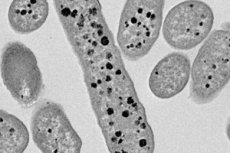
On February 19, 2026, researchers from Nagoya University reported a mechanism that could explain some of these "stubborn" cases: a cluster of two bacteria sometimes becomes active in the colon, capable of sequentially breaking down the protective layer of intestinal mucus and "drying out" the stool. The authors call this variant "bacterial constipation" and believe it requires different therapeutic approaches.
Background of the study
Constipation is one of the most common digestive complaints. According to large reviews, the average prevalence of chronic constipation in the population is approximately 14%, although the figures vary depending on the diagnostic criteria and region.
In the "functional" or "idiopathic" variant, it's difficult to find a clear cause: there's no tumor, significant inflammation, or obvious anatomical problem, yet the symptoms persist. In such cases, the standard "intestinal movement is too slow" model doesn't always work, prompting the search for other mechanisms.
One of the most promising areas of research in recent years is intestinal mucus. The colon wall is coated with a gel-like layer made up of mucins—complex proteins with carbohydrate chains. This layer retains water, ensures the "gliding" of contents, protects the epithelium, and separates microbes from the intestinal surface.
Importantly, the microbiota not only "lives alongside" mucus but also processes it. Normally, this may be part of the balance: mucus is renewed, and some bacteria use its components as a food source. However, if mucus breakdown becomes excessive, the barrier may become thinner, and the physical properties of the intestinal contents may change.
A separate clinical context is Parkinson's disease. Constipation is common in these patients (reviews cite a range of approximately 50%-80%) and often appears long before motor symptoms, sometimes 20 years or more. Therefore, any new "intestinal" hypothesis is particularly interesting: it may explain some of the early manifestations and suggest new treatment targets.
Why is this important?
If the cause of constipation is not related to motility, but to "dehydration" of the contents due to a deficiency of protective mucus, then laxatives and peristaltic stimulants may indeed work less effectively: they speed up movement, but do not restore the mucous layer's function of retaining water and lubrication.
Furthermore, the connection with Parkinson's disease broadens the topic beyond gastroenterology. If a microbial mechanism is involved in symptoms that appear decades before tremors and stiffness, this changes the understanding of the "targets" for prevention and early intervention.
Purpose of the study
To test whether a combination of gut bacteria can cause persistent constipation by breaking down colonic mucin (colonic mucus), and to identify a specific biochemical "button" whose blocking prevents this process.
Materials and methods
The researchers focused on two members of the microbiota: Akkermansia muciniphila and Bacteroides thetaiotaomicron. According to the authors, these bacteria are capable of working in tandem to gradually prepare mucus for breakdown.
The key experiment was conducted on germ-free mice, which lack their own microbiome. This model allows for precise control of the bacterial composition and the ability to determine whether it causes constipation and changes in the mucus layer.
To test causality, the authors genetically modified Bacteroides thetaiotaomicron so that it could no longer activate the enzyme sulfatase, which removes the "protective" sulfate groups from mucin. The modified bacteria were then co-inoculated with Akkermansia muciniphila and assessed for the development of constipation and mucus retention.
The study also noted that patients with Parkinson's disease have higher than expected levels of these mucus-degrading bacteria, and this is discussed as a possible contribution to the severe, difficult-to-treat constipation associated with the disease.
Results and interpretation
The authors described a two-step mechanism. First, Bacteroides thetaiotaomicron uses enzymes to remove sulfate groups from mucin, which normally "shield" the mucus from degradation. Then, Akkermansia muciniphila gains access to the "naked" mucin and actively breaks it down and consumes it. The result is a decrease in mucus production, loss of moisture in the stool, its compaction, and difficulty in passage.
The strongest argument for causality is interference with a key enzyme. When Bacteroides thetaiotaomicron was genetically knocked out of its ability to trigger sulfatase, even in the presence of Akkermansia muciniphila, constipation did not develop in germ-free mice, and mucus remained intact. This indicates that the "bottleneck" in the mechanism is precisely the mucin desulfation step.
A clinical observational study is particularly noteworthy: higher levels of these bacteria were detected in patients with Parkinson's disease, in whom constipation can appear long before motor symptoms. This does not prove that bacteria cause Parkinson's disease, but it does support the hypothesis that microbial factors contribute to early symptoms in some patients.
Simplified diagram of the mechanism
| Stage | What's happening | What changes clinically |
|---|---|---|
| 1 | Bacteroides thetaiotaomicron removes sulfate groups from mucin using sulfatase | Mucus becomes vulnerable to breakdown |
| 2 | Akkermansia muciniphila breaks down and consumes mucin | Reduced lubrication and water retention |
| 3 | Mucin deficiency reduces hydration of intestinal contents | Stool becomes dry and hard, and constipation symptoms intensify. |
Discussion
The press release quotes lead author Tomonari Hamaguchi, who explains the logic behind the enzyme's "causality check":
"We genetically modified Bacteroides thetaiotaomicron so that it could no longer activate the enzyme sulfatase, which removes sulfate groups from mucin."
He then describes the results of an experiment on sterile mice:
“We placed these modified bacteria into germ-free mice along with Akkermansia muciniphila, and, surprisingly, the mice did not develop constipation: the mucin remained protected and intact.”
The authors interpret this as meaning that the “target” for future drugs may not be in the nervous regulation of the intestine or in the muscles of the intestinal wall, but in the microbial enzyme that triggers the destruction of the mucous barrier.
Practical significance
The main practical conclusion is that in some people, chronic constipation may potentially be associated with an imbalance in the microbiota, leading to a loss of colonic mucin, meaning that motility-only therapy may be insufficient.
The authors suggest that approaches that protect the mucus layer or block bacterial sulfatase may be promising. This is a concept, not a definitive treatment, but it does provide a specific target for drug development and diagnostics, including the idea of identifying a "bacterial constipation profile" based on the composition of the microbiota.
For patients with Parkinson's disease, this work adds another possible element to our understanding of early non-motor symptoms. Constipation in the prodromal phase of Parkinson's disease has long been described, and a microbial mechanism may be one explanation for why, in some patients, this symptom is extremely resistant to standard therapy.
Restrictions
The term "bacterial constipation" remains a research concept based on a specific model of the mechanism and experiments on germ-free animals. Clinical practice will require confirmation of how common this mechanism is in people with chronic constipation and whether it can reliably distinguish a subtype of the disease.
The observation of elevated levels of mucus-degrading bacteria in Parkinson's disease does not in itself prove causality: it is unknown whether this is a cause, a consequence, a marker of diet, drug therapy, or other factors. Prospective studies and, possibly, interventions that alter the microbiota and measure the clinical effect are needed to answer this question.
Finally, mucin-associated bacteria may play a dual role: in some conditions, they support mucus renewal, while in others, they contribute to its depletion. Therefore, any future interventions must consider the context, dosage, and safety for intestinal barrier function.
Conclusions
Scientists have described a 2-bacterial mechanism in which sequential destruction of colonic mucin leads to 'drying' of feces and the development of persistent constipation, with a potential role for bacterial sulfatase as a therapeutic target.
The study doesn't rule out the classic causes of constipation, but it does add an important insight: for some patients, the key problem may not be motility, but the condition of the mucus barrier and the microbial enzymes that destroy it.
Scientific article: Hamaguchi T. et al. Bacterial constipation: Mucin-degrading intestinal commensal bacteria cause constipation, Gut Microbes, 2026. DOI: 10.1080 19490976.2025.2596809.